Wasps Nest Removal Solution Cost

Wasps Nest Removal in Yorkshire, UK: Solutions and Cost

Witnessing buzzing insects like the wasps during the warmer months is typical, but least pleasant.
Especially if you are allergic to stings, observing fleeting insects could induce unwanted threats.
Therefore, instead of being panic-stricken, it is essential to be aware of the appropriate methods to get rid of wasps.
This post gives you the information on the common wasp nest and the best way to remove the nest:
- The nuisance wasps can create
- How you can get rid of wasps
- What is the cost of wasp nest removal
Along with that, we are going to shed light on the wasp nest removal in the UK.
By the time you read it thoroughly, you will understand how to deal with these seasonal insects and wasp nest correctly.
However, before that, let us gain some insights into the innate activity of wasps.
Wasps reside in colonies and get categorised as social insects. The queen wasp begins building a nest after hibernating the entire winter month.
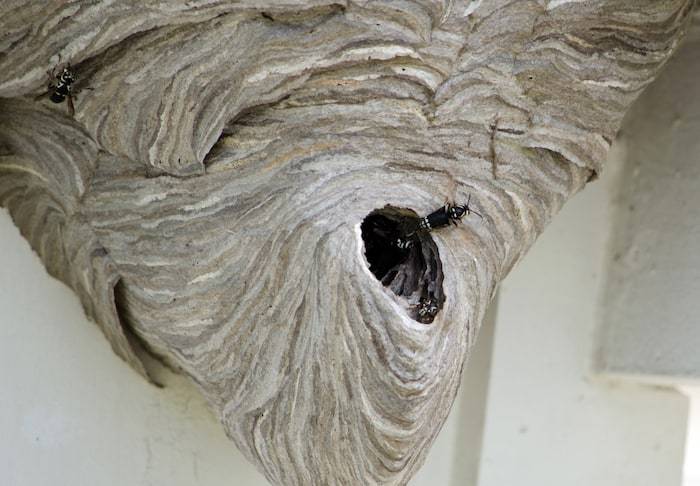
Once she spots a suitable area to fabricate the nest, she will lay eggs which will eventually become active nests. The nests are paper mache like material that wasps build by chewing on the wood and afterwards creating the nest.
Initially, the nest is tiny, approximately the size of a small ball where the queen wasp lays eggs.
Then, as larva reaches adulthood (and called the worker wasp), the nest also grows with time.
While there is only one queen wasp, worker wasps can get found in hundreds or even thousands.
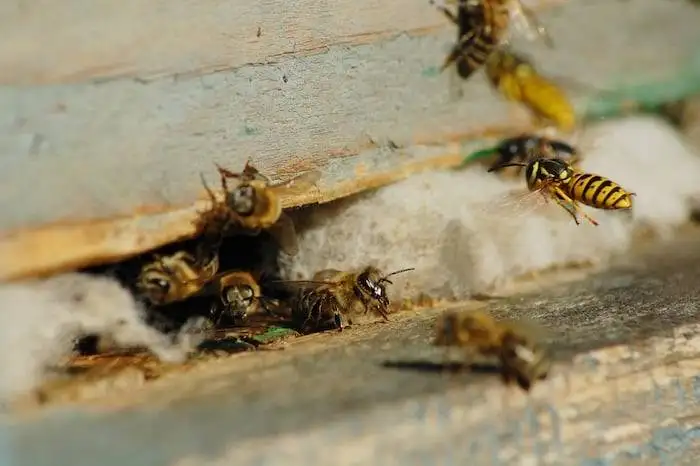
It is during this time that you would see a swarm of wasps buzzing in your home or garden. The hive can get found in several places, including air brick, wall cavity, and sheds.
Typically, the wasp is lured towards sweet edibles like over-ripe fruits. This is why you can easily spot them during your sunny evenings.
Even though these fleeting insects maintain our ecology with their innate activities like pollination and a natural bug predator in the garden, they prove to be troublesome for the public and home-owners.
So before we get to the heart of the matter, let us understand why you should consider removing the nest.
Why Consider Nest Removal?
Despite the wasp’s benefit to nature, these insects are quite dangerous, and their involvement with humans end up in unlikely circumstances.
Therefore, it is advisable to not meddle with the wasps and leave the matter to the professional pest control experts.
Moreover, here are two significant reasons you should consider wasp nest removal:
1. Wasps make the place unhygienic.
Wasps often forage to unsanitary places to collect food and building material.
This way, they contain many germs, and if the nest is inside your home, it can result in a very unhygienic environment.
Having a pest infestation inside the home should call for your immediate attention and eradication for the safety of your family.
2. Injurious Stings
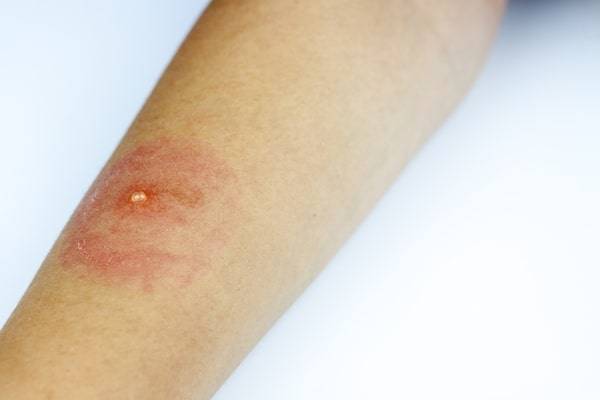
Wasp stings are not foreign to us. It is integral to understand that wasp stings contain venom and lead in painful bites.
Especially if you are allergic to insects or their stings, they will cause more pain to you.
Moreover, under some rare circumstances, the stings can prove to be fatal as well.
So these were two primary reasons you should consider wasp removal from your home and office.
To ensure safety at all times, keep the potential entrance points sealed. This could include windows, wall cracks, and more.
Read on to understand how to get rid of wasps without getting stung.
Should You Remove a Wasp Nest?

If you run a simple search on the internet, you will find endless DIY methods, wasp traps and ideas to remove a wasp nest.
While some suggest wrapping the wasp nest in a garbage bag and disposing of it, other methods include spraying the nest, shooting it out of a tree or approaching it at night.
However, the reality is that all of these methods are more dangerous than they sound. And the people attempting it aggravated the wasp and got stung multiple times, especially without the correct protective equipment.
Not only will a failed attempt put you in big-time trouble, but chances are also wasps will return to their nests. Therefore the efforts will not be fruitful when trying to remove the nest from your property.
Wasps become aggressive when threatened and attack collectively. Not only this, but, they also sting multiple times, causing immense pain and making it extremely difficult for you to escape.
Therefore, DIY methods like drowning wasp nests in water, homemade wasp traps made of fruit should be avoided at all cost; instead, a professional pest controller should get called at this time to remove the wasp nest.
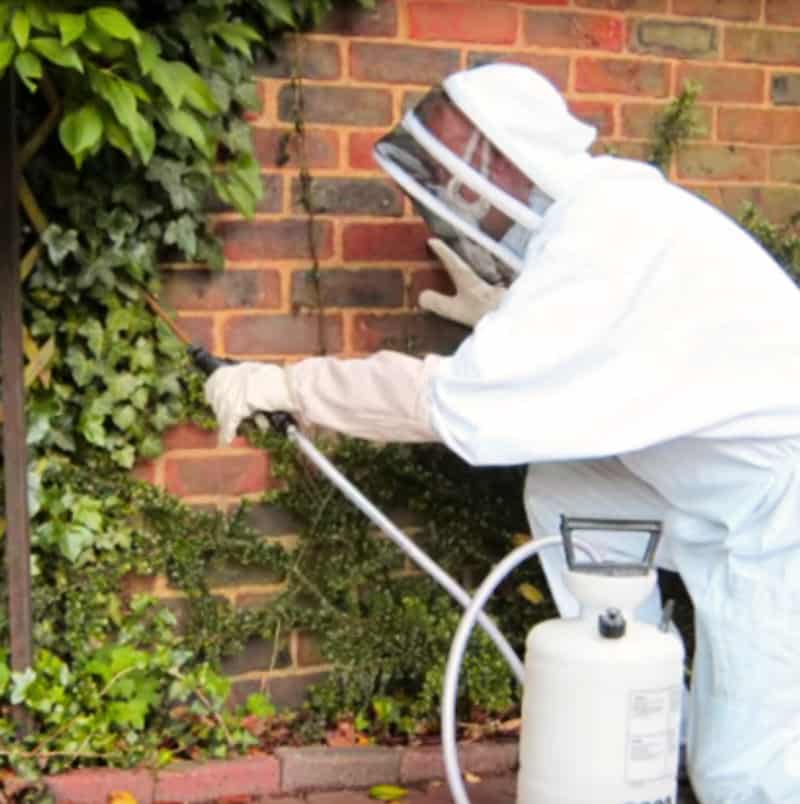
Our method of approaching the nest is safe since we are trained pest controllers and wear protective clothing at all times of the operation.
Moreover, with wasp control, we use pro-grade material that does not do any harm and will remove the nest conveniently.
How Do I Get Rid of a Wasps Nest?
Now let us address the burning question – what is the right method to take and get rid of a wasp nest from your home, garden shed or office property.
To eradicate wasps from your home, without causing any damage to your property, we suggest reaching out to us and seeking professional pest control services.
Our staff is not only certified but also trained to handle aggressive wasps in the most effective manner. In our experience, we find that sometimes homeowners and places of business like an office block have multiple wasp nests on their property. As of spring to late summer, it highlights the dominant, larger nest.
After a wasp control visit, some people find a new nest local to the old nest or in another part of the location and say the wasps have returned. The initial wasp nest treatment is successful in removing the pest issue. However, there is sometimes more than one nest, and people did not notice the smaller wasps nests.
That is why we always recommend a local skilled pest expert to carry out a local pest inspection before any nest gets treated.
We perform our operation with all the right types of equipment and ensure that the flying bugs get no chance to escape and the colony gets treated right to the core including the grubs.
This is done to ensure that wasps do not come back near the nest or create a wasp nest in the nearby area, causing more trouble.
To help us understand the matter and assist you better, we advise that you explain to us as much information about your residence and the exact location of the infestation.
Often, the wasp nest exists in your nearby houses and not your own; hence, we suggest the step mentioned above.
How Much Does it Cost to Remove a Wasp Nest?
The cost of getting rid of pests and wasps nests depends on multiple factors, and there is no standard rate for the solutions.
The deciding elements are:
- Location of your home
- Area of infestation
- Size of the nest
- How accessible is the area of infestation
Based on these factors, the rates differ. For a wasp nest removal in Barnsley, the cost is £50 while in other areas it is commonly £65.
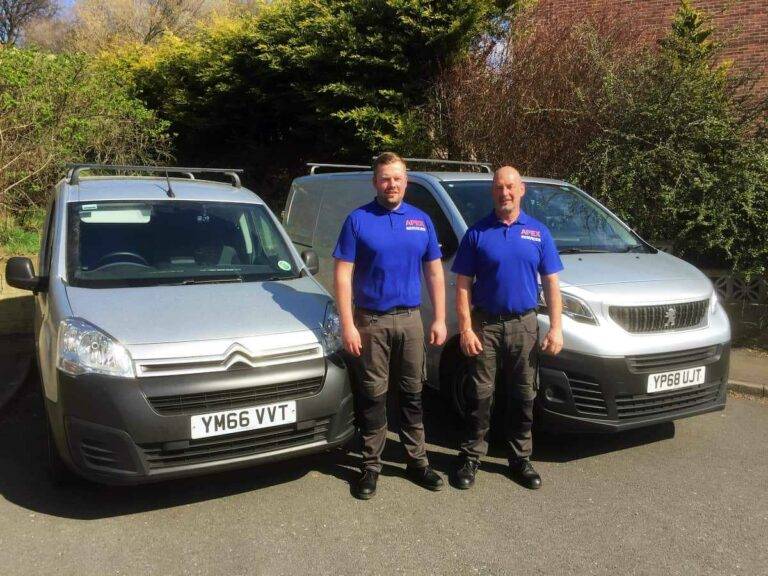
Whether you have hornets, bees or wasp nest that needs treatment, we provide a local service to remove the issue. At Apex pest services, our experts are skilled and experienced in wasp nest treatment and removing the grubs and old wasp colony.
If you want to check the availability and cost in your local area, please contact us, and an expert will assist you with the necessary pest treatment.
Wasp Nest Removal in the UK
If you are still pondering over the question “How do I get rid of a wasps nest UK?”, then you can call us, and we will assist you on the required next steps.
At Apex Pest Control, we help with several pest infestations, including wasp nest removal solution cost in South Yorkshire and West Yorkshire.
To provide you with impeccable pest control services, we operate all 7 days of the week, and our team of technicians arrive at a time convenient to you.
Moreover, we are BCPA (British Pest Control Association) trained and NPTA members, which are a governing body for pest control in the UK.
This implies that we are a qualified and fully insured company and will deal with various pest control and wasp nests infestations effectively.
Give us a call now for more information and timely eradication of the wasps and wasp nests.
We hope this blog helped you identify the critical facts about wasp nest removal.
Do not wait for too long, take action this Autumn and spring to remove bees, hornets or the dreaded wasp nest before the nest gets bigger and create further problems.
The pesky invaders cause a nuisance in the home and garden and cause to disturb your otherwise perfect evenings. Reach out today and get a safe, reliable and competent professional solution and service.
Call Apex head office on 0114 3491098
Read more on wasp and bees in our related post: https://apex-pest-control.co.uk/finding-the-best-wasp-exterminator-near-you/
Apex Pest Control
Tony has worked in the pest control industry for 30 years. He carries a wide range of expert knowledge ranging from business and commercial contracts, farming, forestry to domestic household pests.




 Apex Pest Control