Pest control might not be something you think about every day when running a home or business. However, once pests appear, dealing with them quickly becomes a priority. When an infestation occurs, it helps to already know which professional pest control company you can contact for a fast response.
Having reliable commercial pest control specialists available can make a big difference when pests begin affecting your property. A trusted service ensures the problem is addressed quickly and professionally.
Accessing Pest Control Services in West Yorkshire
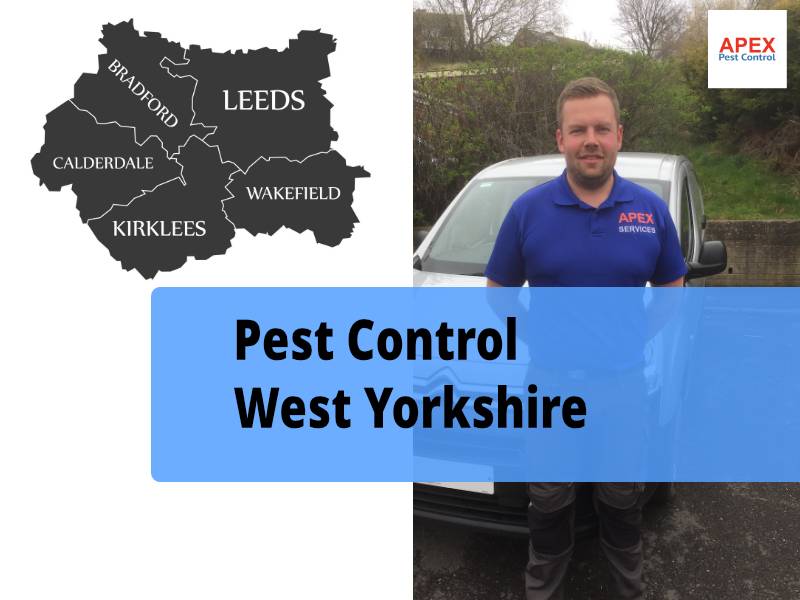
West Yorkshire is a fantastic region to live and work in. Cities such as Leeds, Bradford, and Wakefield offer busy urban environments, while nearby areas like Otley and Denby Dale provide beautiful countryside surroundings.
Because the county includes both urban and rural landscapes, pest issues can arise in many different settings. Businesses and homes may experience problems with a wide range of pests, including rodents, birds, insects, and even moles.
If insects settle in your property or pests appear around your business premises, prompt pest removal is important. Professional pest control companies such as Apex Pest Control support both private customers and businesses throughout West Yorkshire when pest problems occur.
Types of Pest Control Services Available
Pest infestations can vary depending on the environment and the species involved. Services such as bird control, insect control, rodent management, and bed bug treatments are among the most common issues property owners face.
These problems often require quick attention, but they also need to be handled carefully. Professional pest control ensures that treatments are carried out safely, effectively, and with the right level of expertise to protect both people and property.
Rat Control
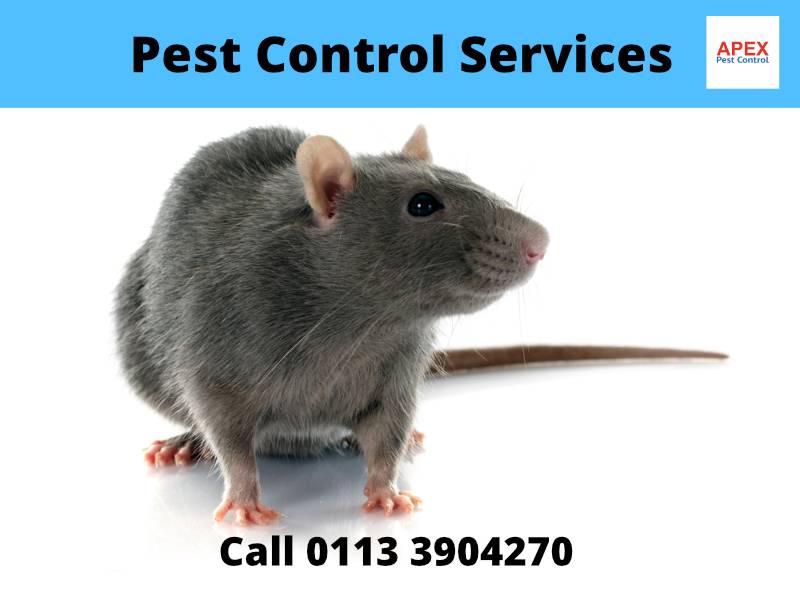
Rodents are one of the most common pest problems. Seeing a rat or mouse inside your home or business is never pleasant. If you notice rodents or signs of their activity, taking action immediately is important to prevent the problem from spreading.
Bed Bugs
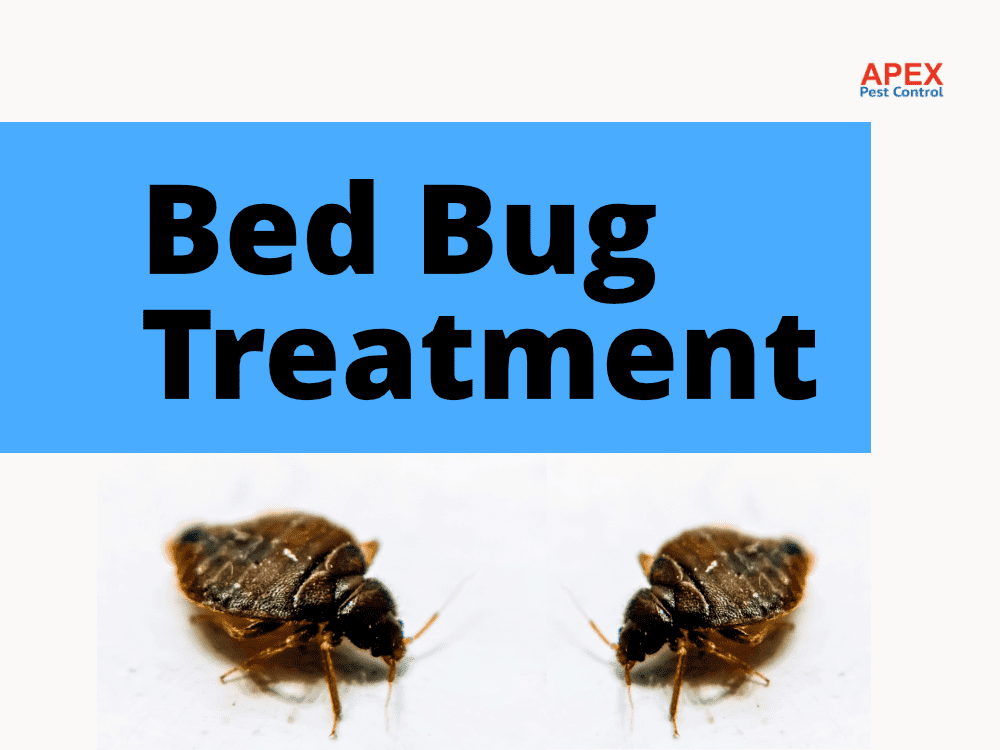
If you are waking up with bites during the night, bed bugs could be the cause. These tiny pests are difficult to detect and often require professional treatment to fully remove them from a property.
Flying Insects
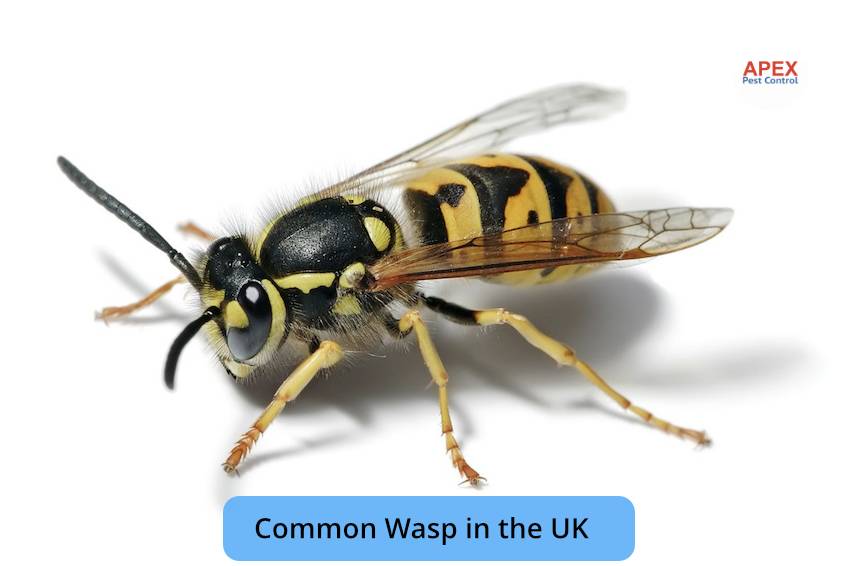
Flying insects can also create problems, especially during warmer months. Wasps are a frequent concern and can make outdoor areas uncomfortable or even dangerous if they begin building nests nearby.
Bird Control
Some animals may not seem like pests at first, but they can still cause issues when they settle in the wrong places. Birds nesting in lofts or roof spaces can damage buildings and create hygiene concerns.
Insects appearing around outdoor areas may also make it harder to enjoy gardens and outdoor spaces throughout West Yorkshire. In addition, smaller pests such as moles can burrow beneath the land and cause damage to lawns and landscaped areas.
They’re everywhere – Harehills, Moortown, villages, millionaire mansions. Rats don’t discriminate and if they get in your house their population will just explode.
Why Choose Apex Pest Control?
Every pest problem is different, and the solution often depends on the type of pest, the property involved, and how quickly the issue needs to be addressed. With Apex Pest Control, you can rely on a service that focuses on resolving pest problems efficiently.
Our team has more than ten years of experience delivering pest control services to both domestic and commercial clients across West Yorkshire.
Professional Service with Quality & Experience
We understand that dealing with pests can sometimes feel stressful or uncomfortable. Because of this, our team always aims to provide a discreet and professional service. When visiting homes or businesses, our technicians arrive in unmarked vehicles to maintain privacy while addressing the problem.
You can also learn more about our pest control services on our website, where information is available for both residential and business customers. We provide free quotes and also display clear pricing for many of our pest control services.
In some cases, more than one visit may be required to ensure the infestation has been completely removed. This helps protect your property and reduces the risk of pests returning. Our pricing remains transparent and competitive.
Apex are Members of the NPTA
Apex Pest Control is proud to be a member of the National Pest Technicians Association (NPTA). Membership with this organisation confirms that our company meets professional standards for training, insurance, and responsible pest management practices.
Contact Us
Our family-run team has many years of experience providing professional pest control services throughout Yorkshire. Contact us today and keep our details handy for the future.
Whether you require bird control, insect treatment, rodent removal, bed bug services, or mole control, Apex Pest Control is ready to help when pest problems appear.
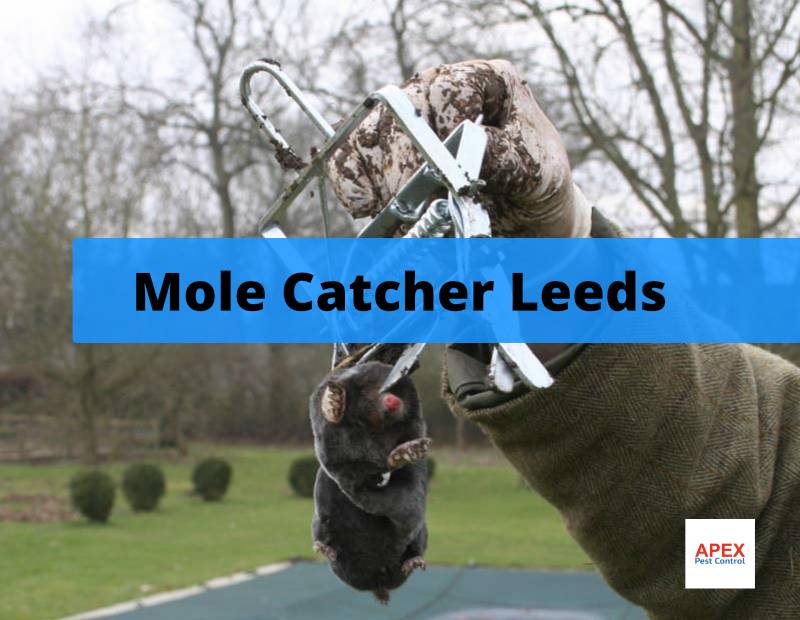
Speak to a dependable mole catcher in Leeds for prompt and effective mole control.
Moles are not always the first pest people think about when dealing with outdoor problems. However, once they begin to appear, they can quickly become a serious concern that needs fast attention from a professional pest control provider such as Apex Pest Control in Leeds.
Garden moles are small mammals that live underground and mainly feed on earthworms and insect larvae found in lawns, paddocks, farmland, and even golf courses. Although they do not eat plants, their digging behaviour can cause significant disturbance to the ground. Moles are skilled diggers that build large tunnel systems beneath the soil, often spreading across fields and wide open areas.
As mole numbers increase, the underground network of tunnels can expand over large sections of land. This makes managing the problem more difficult for landowners and requires the expertise of an experienced mole catcher.
Another concern is that these tunnels may also be used by other unwanted pests. Rodents such as rats, along with other pests, can move through the ground using mole tunnels and potentially reach nearby properties.
Because of these risks, professional mole control is important. Contacting a pest management company like Apex Pest Control Leeds as soon as possible can help address the problem efficiently.
Why Mole Catching Is Important
If you want to stop a mole problem before it spreads further, professional assistance is the best option. Contact Apex Pest Control Leeds today on 0113 3904270.
We are proud members of the British Mole Catcher Register.
Why Moles Can Cause Serious Problems?
Mole control should always be handled by trained pest management professionals. One of the main challenges with moles is the type of locations they choose to live in. They prefer quiet, sheltered underground spaces where the soil is suitable for digging. Even built-up areas can provide these conditions, which is why moles are sometimes found in Yorkshire cities such as Leeds.
Having moles in your garden, they’ll destroy plant roots, bulbs and grass. Their tunnels can collapse and have to get filled in to keep the ground safe for animals and humans.
Moles are particularly active in soil that is damp and rich with worms and grubs. Because of this, their activity can spread into nearby countryside areas, villages, and green spaces. Locations such as Otley often experience mole activity across gardens, golf courses, caravan parks, and similar areas.
Since moles can cover large sections of land, mole control services are often required across wide areas to properly manage the problem.
Where Moles Are Often Found Around Leeds?
Both residential properties and commercial premises may need the support of a professional mole catcher. Gardens and land across many villages experience mole activity that can quickly lead to visible damage and disruption to outdoor areas.
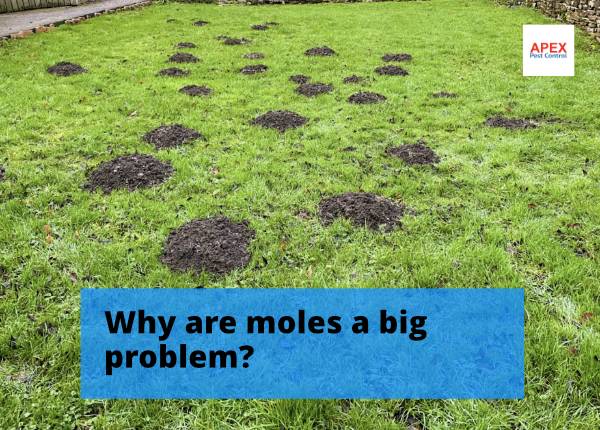
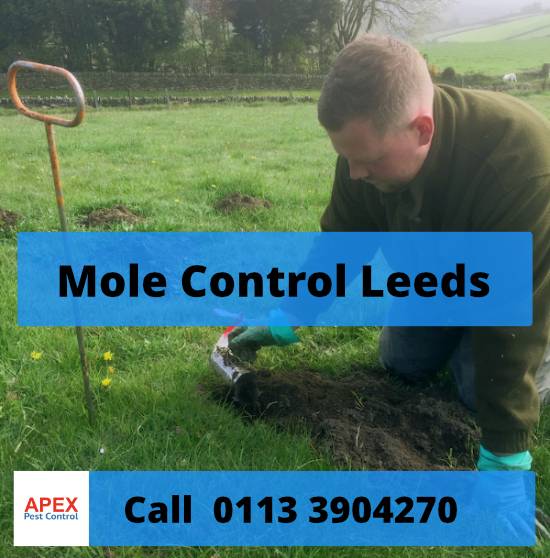
One of the most obvious signs of moles is the appearance of small mounds of soil across lawns or open land. These molehills are a clear indication that tunnels are active below the ground.
We frequently carry out mole control work in locations including:
Farms
Paddocks
Schools
Golf courses
Caravan parks
Private gardens
For businesses, moles can create additional challenges. On golf courses, for example, mole activity can damage the appearance and condition of the grounds, which may discourage members and visitors.
Caravan parks can also be affected if guests notice moles digging beneath the land. This may raise concerns about ground safety and the overall condition of the site. Because moles often occupy large areas, ongoing monitoring and control may sometimes be necessary.
Schools are another place where mole control may be required. Apart from damaging lawns and outdoor spaces, the presence of moles may also cause concern for children. Quick and professional removal helps maintain safe and tidy school grounds.
Farms and agricultural land are also particularly vulnerable. Moles can disturb crops and farmland, and their tunnels may create risks for livestock. In these situations, contacting a professional mole catcher quickly is the best way to deal with the issue safely.
How to Contact a Mole Catcher in Leeds?
Since moles live underground, their activity is often unnoticed until signs appear on the surface. Once molehills become visible, it is important to act quickly and arrange professional mole control.
Apex Pest Control Leeds offers mole catching services for both residential and commercial customers throughout Yorkshire. Our team works with clients across the region, including Leeds, Otley, and surrounding villages. You can learn more about our mole control services and the areas we cover by visiting our website.
Apex Pest Control Can Solve Your Mole Problem
Whether you are dealing with a minor mole issue or a larger infestation, our team is ready to help. You can contact Apex Pest Control Leeds directly by phone or explore our range of pest management services online, including mole catching.
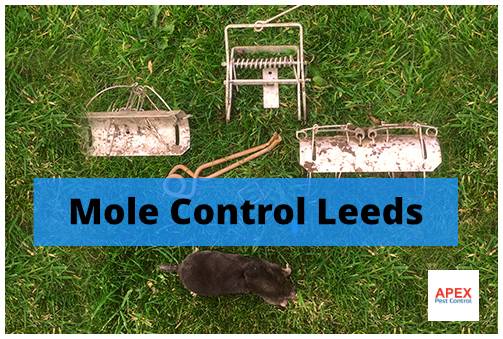
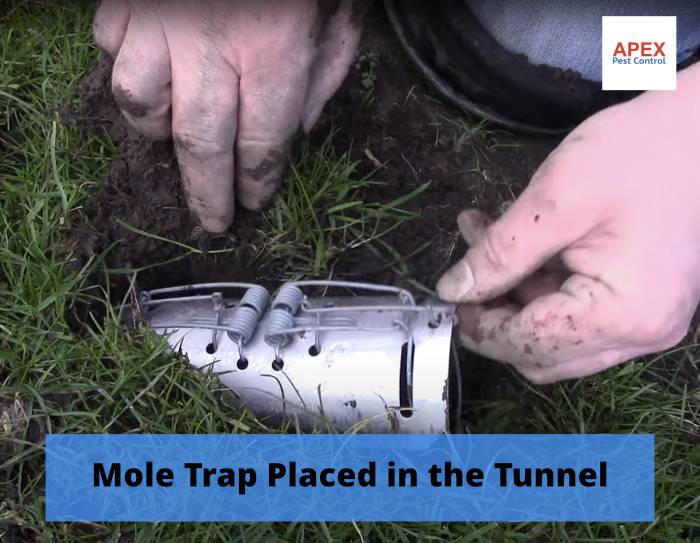
Our domestic mole control service starts from £160, which typically includes three to four visits using professional trapping methods. For commercial enquiries, please contact us to request a free quotation.
Call Apex Pest Control Leeds today and arrange for a professional mole catcher to deal with your mole problem.
Need mole control in Leeds? Contact Apex Pest Control on 0113 3904270.
Rat Control in Leeds: Rodent Treatment and Vermin Solutions
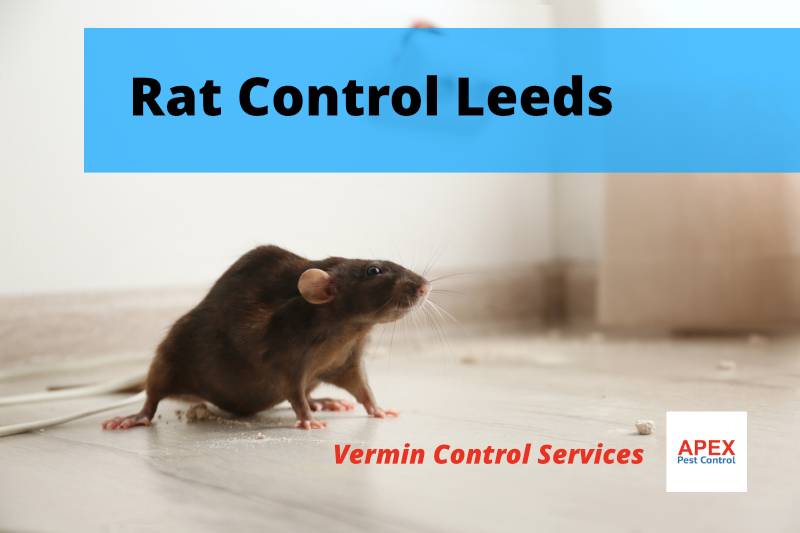
Have you started hearing scratching or movement beneath your floorboards or inside the walls? These noises could be a sign that a rat has entered your property. Pest problems are never pleasant, but rodents are often among the most concerning for both homeowners and business owners.
Rats can develop into a serious issue, particularly in large cities where food, shelter, and warmth are easy to find. Once they gain access to a building, they may begin damaging materials and creating hygiene risks if the situation is not addressed promptly.
Rat Control Services in Leeds
For many homeowners, discovering rats in or around their property can be very unsettling. Rodents are known to create numerous problems, particularly when it comes to hygiene. As they move around a property, they leave urine and droppings that may carry harmful bacteria and diseases.
Rats are not limited to gardens either. They frequently find shelter beneath floorboards, inside wall cavities, and within loft spaces. At the same time, they constantly gnaw on materials such as pipes, wood, insulation, and electrical wiring.
This behaviour can lead to expensive repairs and disruption for property owners. Although infestations can feel embarrassing, pest control companies in Leeds deal with rodent issues every day. Busy cities such as Leeds provide ideal environments for pests searching for warmth and food, and rodents can reproduce very quickly once they settle in an area.
If you require professional vermin control, you can arrange a visit from a local pest control specialist in Leeds by calling 0113 3904270.
Why Choose Apex Pest Control Leeds
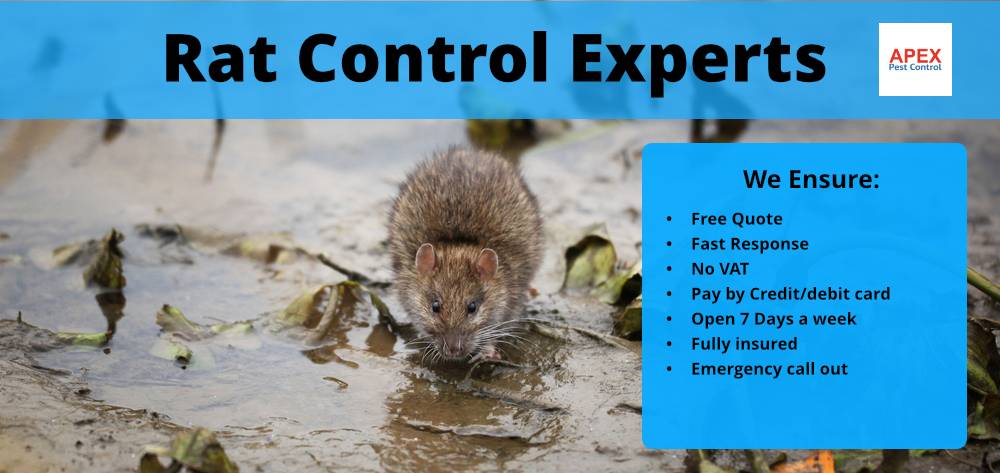
At Apex we guarantee:
A fast response
A free no-obligation quote. No hidden costs – and NO VAT
An experienced, professional and friendly qualified pest technician
Guaranteed results
Fully insured public liability
CHAS registered
Child and pet-friendly methods and products
7 days a week availability
Discreet pest control
Emergency call outs
Expert Vermin Management in Leeds
When dealing with rats or mice, there are several options available. Some property owners contact Leeds City Council or larger national pest control providers. However, when rapid action is required, a local company can often respond more quickly.
Apex Pest Control Leeds has more than thirty years of experience in the pest control industry. During this time, the company has developed practical solutions for a wide range of pest problems while maintaining clear communication and transparent pricing.
Once a treatment plan has been approved, work can begin without delay. Our technicians regularly deal with mice, rats, wasps, bees, squirrels, and garden moles. Treatments may involve traps, bait stations, and proofing measures designed to prevent rodents from returning.
Keeping Rodents Out of Your Property
Rodents and other pests have the potential to cause significant structural damage to buildings. Birds, insects, and rodents may harm insulation, roofing materials, electrical wiring, and other important parts of a property.
When signs of pest activity appear, it is important to act quickly to prevent the situation from becoming worse. Some property owners attempt to resolve infestations themselves, but these efforts are often ineffective.
Rodents are difficult to remove without the correct equipment and knowledge. Because every infestation develops differently, professional pest control services are usually the safest and most reliable solution.
Average Rat Control Prices in the UK
The cost of professional rat control in the United Kingdom typically falls between £95 and £200. On average, most treatments cost around £150 depending on the size and complexity of the infestation.
Before treatment begins, a qualified pest control technician will usually carry out an inspection of the property. This assessment helps determine how severe the infestation is and which treatment methods will be most suitable.
Why Rats Get into Houses and Businesses
Rat infestations are more common than many people expect. Estimates from the British Pest Control Association suggest that the number of rats in the UK could range between 10.5 million and 120 million.
Rodents live in both rural areas and large cities, including places like Leeds. Areas with restaurants, cafés, food shops, and waste storage often provide an easy supply of food for rats.
They are able to enter buildings through air vents, drainage systems, small openings in walls, and gaps around pipes. Even small crumbs or leftover food can attract them inside. In recent years, milder winters have also increased rodent activity because warmer conditions allow them to survive and reproduce more easily.
Eliminating Rats Safely and Rapidly
If rats are discovered in a property, contacting a professional pest control company is usually the best first step. Responding quickly helps reduce potential damage and prevents the infestation from spreading further.
Businesses must also act promptly when rodents are detected. The Prevention of Damage by Pests Act 1949 requires property owners to take reasonable measures to keep buildings free from rodents.
While Leeds City Council may deal with certain pest control cases, their services can sometimes be limited. In situations where immediate action is required, local pest control providers such as Apex Pest Control Leeds are often able to respond faster.
Does the presence of one rat indicate the presence of others?
In many cases, spotting a single rat suggests that others may be nearby. Rats are social animals that typically live in groups rather than alone.
They also reproduce rapidly, meaning that a small presence can develop into a larger infestation if it is not addressed. Rats frequently hide in lofts, basements, cavity walls, and other sheltered areas within a building.
How Apex Pest Control Handles Rodent Infestations
Apex Pest Control Leeds has assisted local residents and businesses with pest problems for many years. The goal is to provide dependable pest management solutions that resolve infestations efficiently.
Every situation begins with a detailed inspection of the property. This survey allows technicians to identify nesting areas, entry points, and the overall size of the infestation.
During the inspection, common rodent hiding places are carefully checked. These areas may include:
Gardens and garage
Roof and loft spaces
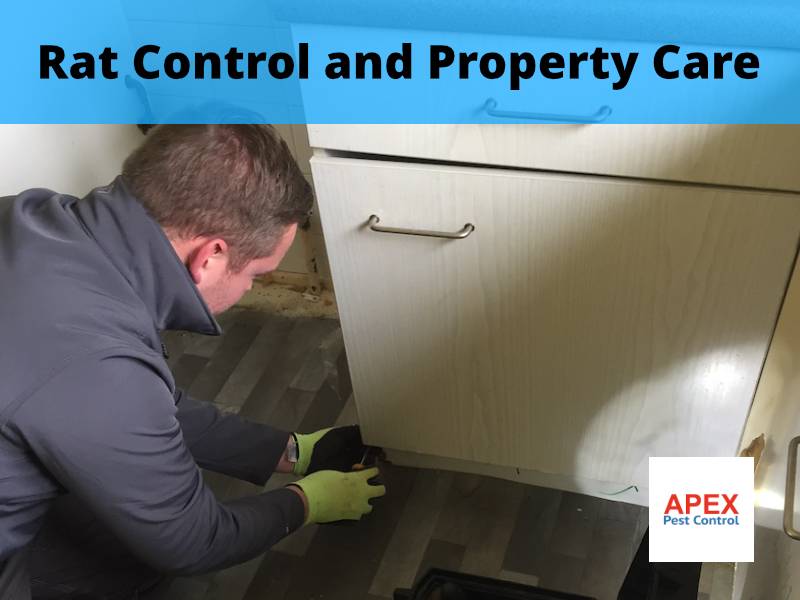
Under kitchen units
Rodent Proofing and Pest Treatment
During the property inspection, technicians look for clear signs of rodent activity. These signs may include droppings, grease marks on surfaces, gnaw damage, and unusual odours.
Once the affected areas have been located, entry points can be sealed to reduce the chances of rodents returning. After proofing work is completed, the appropriate treatment plan can be implemented.
Rodents multiply at a frighteningly quick rate, and it’s crucial we make sure our solution is long-lasting.
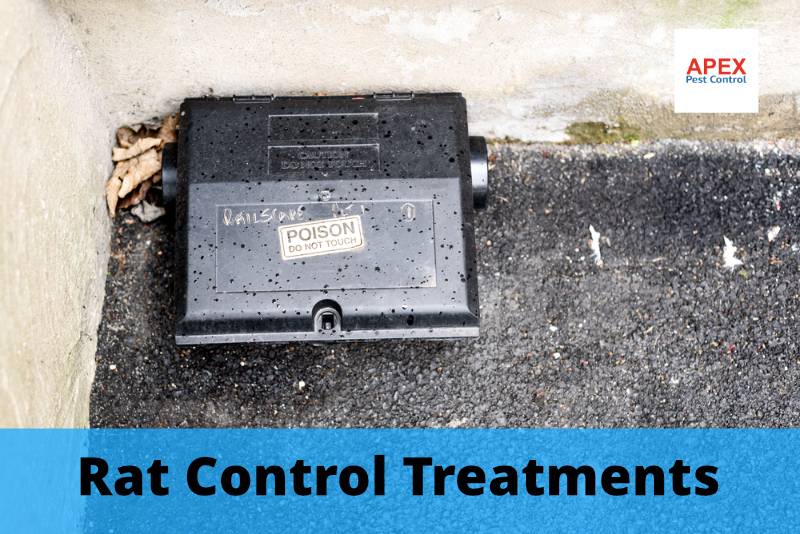
Baiting systems are commonly used because, when applied correctly by trained professionals, they can eliminate entire colonies. All products and treatments are selected carefully to ensure they are safe for households with children and pets.
Follow-Up Visits and Long-Term Protection
Pest control does not finish after the initial treatment. Follow-up visits are carried out to confirm that the infestation has been fully resolved.
The first return visit usually takes place between five and seven days after treatment. During these inspections, technicians remove any dead rodents and check that the treatment plan is working effectively.
Additional measures may also be taken to reduce the chances of rodents returning. After the final visit, Apex Pest Control Leeds provides a 30-day guarantee. If rats are seen again during this period, further treatment will be provided without additional charges.
Signs of Rats and Additional Pest Control Services
Rodent problems can occur at any time, which is why pest control services are available seven days a week. Apex Pest Control provides services throughout Leeds, across West Yorkshire, and in nearby towns and villages.
Our services offered include:
Wasp nest removal
Expert elimination of bed bugs
Mice pest control
All insects
Bees
Woodworm
Flies
Bird control
Bird and rodent proofing
And a full range of pest control services and treatments.
The team regularly assists homeowners and businesses throughout Leeds and the surrounding areas with many different pest issues.
Reliable Leeds Pest Control Professionals
Apex Pest Control Leeds operates every day of the week, ensuring that local residents and businesses can access assistance when it is needed.
Technicians maintain professional training and are associated with recognised industry organisations, including:
Royal Society for Public Health (RSPH) Level 2 qualified
Member of British Traditional Mole Catchers (BTMR)
British Pest Control Association (Trained)
National Pest Technicians Association
The NPTA is a professional trade association, representing the public health and pest control industry.
Membership with recognised organisations helps provide customers with confidence in the quality and reliability of the service provided.
Find Out More About Our Complete Pest Control Services
If you are experiencing pest problems and require dependable rat control in Leeds, Apex Pest Control Leeds is ready to assist.
Our pest technicians operate across Leeds and nearby areas, delivering effective treatments designed to remove unwanted pests from homes and commercial premises. Contact our team today to arrange a visit and restore comfort and safety to your property.
Expert Remedies for Chronic Grey Squirrel Issues: Squirrel Removal Services
The UK’s escalating grey squirrel problem
Infestations of grey squirrels are becoming more widespread in the UK, according to an increase in reports from both business owners and residents. Grey squirrels (Sciurus carolinensis), which were brought from North America in the 19th century, have rapidly adapted to living in both urban and rural areas.
By taking advantage of openings in structures, these invasive rats commonly target attics, lofts, and roof voids.
Once inside, they frequently cause costly damage by chewing through plumbing, electrical cables, and wood. Their urine and droppings pollute stored goods and insulation. Early intervention lowers expenses and lowers the risk of fire or health problems by preventing minor invasions from developing into full-blown infestations.
Identify the Symptoms of an Infestation of Squirrels
Squirrels frequently build their nests beneath roof tiles, in cavity walls, or in loft areas. Being diurnal, they are noisy from dawn till sunset and active during the day.
Among the indicators are:
Scratching, scurrying, or gnawing sounds overhead
Droppings near insulation or beams
Nesting materials like shredded paper or fabrics
Damaged insulation or chewed wires
Squirrels entering through roof gaps or climbing walls
Rodent-induced electrical damage is known to pose a fire hazard. The London Fire Brigade and insurers agree that a large percentage of home fires originate from wiring issues, which are frequently connected to animal activity.
The Impact of Grey Squirrels on Your Home
Squirrels continually grind their teeth to manage the growth of their canines. As a result, they raise the possibility of a fire by removing insulation from live wires. Energy efficiency, structural wood, and stored commodities are all negatively impacted by damaged insulation.
Their pee and poop can contaminate loft spaces and spread germs like Leptospira and Salmonella.
Grey squirrels pose a significant risk to business properties’ food storage, wiring, and HVAC systems, which in turn causes health and safety issues, equipment failures, and downtime.
How Grey Squirrels Endanger Business Warehouses and Other Infrastructure
In warehouses, food outlets, and stockrooms, squirrels can:
Chew through food packaging
Contaminate stock and shelving
Disrupt airflow in HVAC ducts
Cause foul odours by dying in hidden vents
Damage to insulation and structural beams
Audit failure, higher operating costs, and even legal noncompliance with food safety laws might result from this. It could be an extensive infestation if you hear noises coming from above or find chewed materials.
Overview of the Grey Squirrel Species
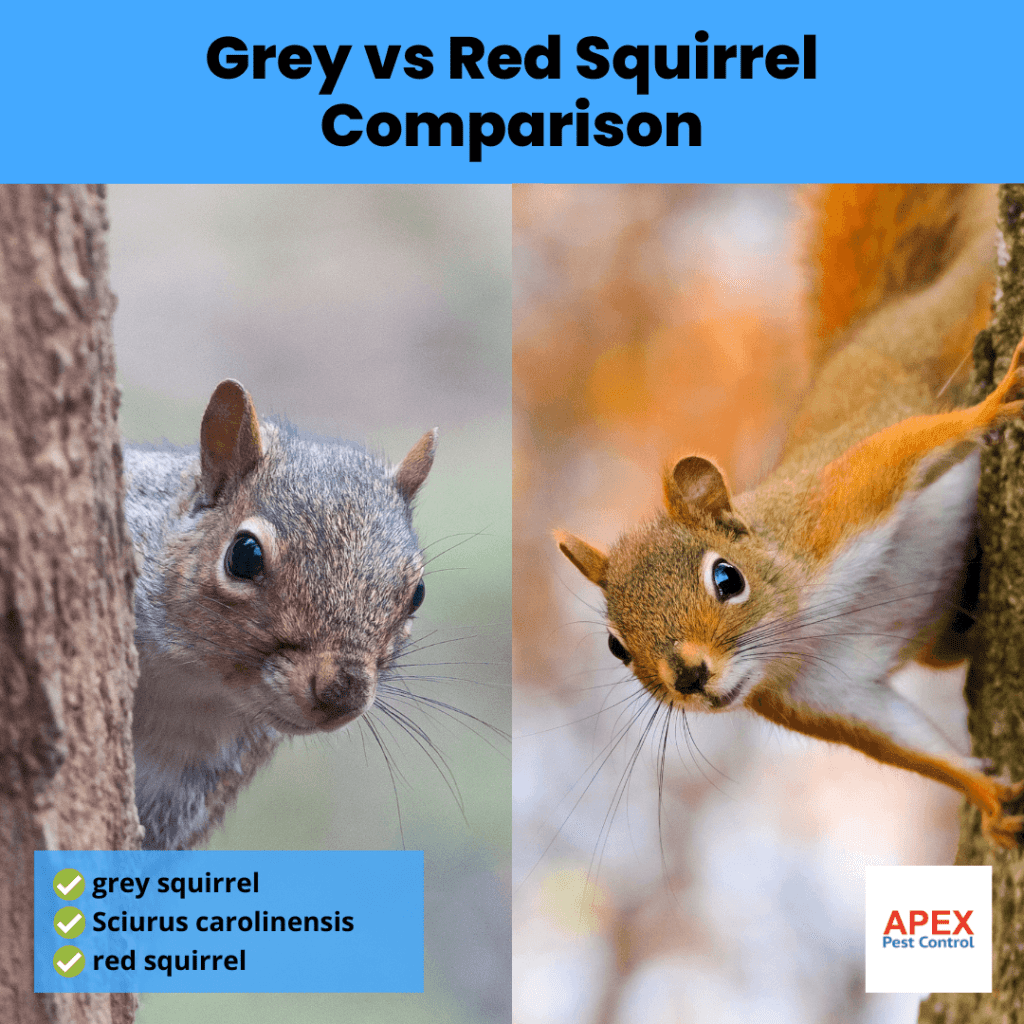
Compared to native red squirrels, grey squirrels are larger and more active throughout the year. They are categorised as an invasive non-native species in the United Kingdom. Native red squirrel populations have declined sharply as a result of their dispersal. Inside buildings, they:
Use insulation and soft materials to nest
Gnaw on beams, wiring, and plastic piping
Enter through roofline gaps, vents, or chimneys
Regulations for Pest Control and Legal Status
Once seized, grey squirrels are prohibited from being released back into the wild by UK legislation. This is explained in:
Wildlife and Countryside Act 1981 (Schedule 9)
Invasive Alien Species (Enforcement and Permitting) Order 2019)
Squirrels that are captured must be handled humanely. Relocating or releasing them without a licence is against the law. For homeowners who use do-it-yourself traps, legal dispatch is also necessary to prevent legal action. In accordance with the Animal Welfare Act of 2006, live-capture traps must be inspected at least once every 24 hours. According to UK wildlife law, prohibited control techniques—like glue traps or unapproved poisons—are unlawful. Keeping a grey squirrel, even temporarily, requires permission under the Imported Animals Order 1932, and licences may also be needed on protected territory (such as SSSIs).
The Seven Most Frequently Asked Questions Regarding Commercial Squirrel Removal
Question
Answer
1. How fast can squirrels damage a server room?
In just 1–2 days, a squirrel can chew through vital cabling, causing outages or fire hazards.
2. Are squirrel traps legal in the UK?
Yes, Squirrel traps are legal in the UK, including humane live-capture traps and approved spring traps (kill traps), provided they comply with UK wildlife law, such as the Spring Traps Approval (England) Order 2012.
3. What happens after the squirrel is removed?
Technicians assess damage and seal entry points to prevent a return.
4. Can squirrels re-enter after removal?
Not if all access points are properly sealed and preventive measures are maintained.
5. Will insurance cover squirrel damage?
Insurance coverage for squirrel damage depends on the policy terms. Evidence of professional pest prevention efforts may strengthen a claim but is not always required.
6. What’s the legal status of grey squirrels in the UK?
Grey squirrels are classed as invasive non-native species under the Wildlife and Countryside Act 1981. It is illegal to release them once captured, and removal must follow UK wildlife law, including humane dispatch under the Animal Welfare Act 2006. Both licensed professionals and non-professionals can trap and dispatch them humanely, though professionals are recommended for compliance.
7. How do pest controllers find where squirrels are hiding?
They inspect common entry points and nesting areas, using tools like thermal imaging, cameras, and experience to detect signs such as droppings, noise, insulation damage, and gnawed cables.
Why Do-It-Yourself Techniques Frequently Fail
DIY deterrents and traps could provide temporary respite, but they frequently overlook concealed entry openings. A few indicators of failure are:
Continued scratching or gnawing sounds
Fresh droppings or damage after initial treatment
Squirrels re-entering blocked areas
Professionals use targeted tools and licensed methods to ensure full removal. They understand squirrel behaviour, identify entry points, and seal vulnerabilities to prevent reinfestation. Tools such as endoscope cameras, smoke pencils, and thermal imaging devices are often used.
When to Hire a Qualified Professional to Remove Squirrels
The BPCA, NPTA, and RSPH standards must be adhered to by UK pest control experts. Selecting a certified contractor guarantees:
Legal compliance
Safe and humane control
Use of approved tools and chemicals
Documentation for insurance purposes
Qualified staff with RSPH Level 2 in Pest Management or equivalent
Make sure technicians offer post-treatment reports and recommendations and are covered by insurance (e.g., Public Liability Insurance).
Practical Advice for Businesses and Homeowners on Squirrel Prevention
1. Seal Entry Points with Durable Materials
Use durable materials such as:
Galvanised mesh
Steel flashing
Expanding wire wool
Avoid using foam sealants alone-squirrels chew through them easily. Focus on roofline gaps, vents, eaves, fascia boards, weep holes, air bricks, and chimneys.
2. Trim Trees and Remove Climbing Routes
Squirrels can jump up to 2 metres horizontally. Cut back:
Overhanging branches to maintain a minimum 2-metre gap from roof edges
Vines or ivy on exterior walls
Maintain a clear perimeter around the roof to reduce access points.
3. Use Physical Deterrents
Heavy-duty vent covers
Squirrel-proof mesh over gaps and air bricks
Ultrasonic deterrents are sometimes marketed for squirrel control, but their effectiveness is unproven and not endorsed by UK pest control bodies such as the BPCA. Physical proofing is more reliable.
Use stainless or galvanised steel to prevent rusting and weather damage.
4. Maintain Regular Inspections
Check seasonally, especially:
After storms or heavy winds
Around building extensions or modifications
In garages, sheds, and outbuildings
Roofline intersections, soffits, loft hatches, and eaves ventilation
Look for signs of re-entry or tampering and act immediately.
Wildlife-Proofing After Removal
After removal:
Block all former access points
Fit chimney guards and mesh vent covers
Use sealants and flashing around weak roofline joints
In commercial sites:
Secure cable access points
Reinforce HVAC ducts
Lock access ladders and plant areas
Protect IT infrastructure and stockroom entrances
Professionals often offer exclusion guarantees based on the quality of proofing work.
Cleaning and Restoration
Squirrel-infested areas must be cleaned carefully:
Wear gloves, mask, and disposable clothing
Spray droppings with a disinfectant or bleach solution
Bag and remove waste securely
Use enzyme-based cleaners on beams and boards
Ventilate the area
Replace chewed insulation, damaged timber, and wires
Always use licensed electricians and builders for repair work.
Safe Handling of Droppings and Nesting Material
Following the removal of squirrels from a property, the cleanup stage necessitates accuracy and adherence to safety protocols. Leptospira, the bacteria that causes leptospirosis, is one of the dangerous diseases frequently found in squirrel pee and excrement.
The fungus spores that can cause histoplasmosis are among the particles that can be released into the air when dried droppings are disturbed.
Before handling any hazardous material, put on protective clothes, disposable gloves, and a respirator rated for particulate protection (such a N95 mask). Before removing droppings and nesting detritus, soak them in a solution of bleach to water (1:10).
Wetting reduces the chance of inhalation and stops dust from forming. Use paper towels or disposable rags to gather the debris, then double-bag it in heavy-duty bin liners and dispose of it according to local biohazard regulations.
Deodorising and Sanitising Loft or Storage Spaces
Long after the rodents have left, their pheromones can still be detected. If these chemical cues are not successfully neutralised, they may attract fresh infestations. These biodegradable remains cannot be removed by ordinary household cleaners.
Clean any impacted wood and insulation with an enzyme-based cleanser, paying particular attention to nooks, crannies, and concealed crevices.
These chemicals eliminate both odour and attractant proteins by breaking down organic waste at the molecular level. After the area has been sanitised, use industrial fans or natural airflow to completely ventilate it over the course of 24 to 48 hours.
Install ozone generators made for loft areas or activated charcoal filters for lingering odours. These will assist restore indoor air quality by absorbing airborne pollutants.
Cost of Squirrel Removal in the UK
The type of property, the extent of the infestation, and accessibility all affect costs:
Residential: £120-£300
Commercial: £300-£1,000+
Request written quotes and ask about post-treatment inspection and proofing guarantees. Reputable companies comply with UK pest control law and offer clear pricing.
Why Delaying Action Is Expensive
Unchecked squirrel infestations can cause:
Fire hazards due to chewed wires
Structural damage from gnawed beams
Insulation contamination
Failed food safety audits
Data loss in tech-heavy facilities
Early intervention prevents costly repairs and operational disruptions.
Local Service Areas
Apex Pest Control provides squirrel removal services in:
Sheffield
Rotherham
Barnsley
Doncaster
Surrounding areas in South Yorkshire
Leeds
Stop a Squirrel Emergency Take Action Today
Grey squirrels pose a threat to the safety and integrity of your house or place of business, making them more than just a bother. Legal compliance and long-term protection are guaranteed by skilled personnel providing expert-proofing and humane removal services.
If you reside in South Yorkshire and think your home may have a grey squirrel problem, get in touch with Apex Pest Control right now for a free loft inspection and no-obligation quote.
Popular Squirrel FAQs
What’s the legal status of grey squirrels in the UK?
Grey squirrels (Sciurus carolinensis) are classified as an invasive non-native species in the UK. Under the Invasive Alien Species (Enforcement and Permitting) Order 2019 and Schedule 9 of the Wildlife and Countryside Act 1981, it is illegal to release captured grey squirrels into the wild. Any removal must comply with animal welfare law and must not involve unlicensed transport or relocation. Humane dispatch is required. DIY removal must follow these same rules, and improper handling may result in a prosecution. Red squirrels are a protected species and must not be harmed or disturbed. In commercial or industrial settings, it’s essential to work with a BPCA or NPTA certified pest technician to ensure compliance.
How do pest controllers find where squirrels are hiding?
Professional pest technicians use experience and tools like endoscope cameras, smoke tests, and thermal imaging to locate nests. They inspect roof tiles, soffits, vents, and eaves for gnaw marks, rub stains, or entry points. Inside, they look for shredded nesting material, droppings, or damage to insulation and cables. Identifying all access points is crucial so they can be sealed after removal to prevent re-entry. This methodical approach ensures the infestation is fully cleared and helps prevent recurrence.
Can grey squirrels cause fires or power outages?
Yes. Grey squirrels gnaw through insulation on electrical wiring, exposing live conductors. This can lead to short circuits, power outages, or fires. The risk is especially high in data centres, lofts, and plant rooms housing electrical infrastructure. While exact percentages vary, rodent-related damage is a known and documented cause of electrical faults and insurance claims in the UK. Professional removal and proofing reduces this risk significantly.
What should I do if I hear noises in the ceiling but can’t see any squirrels?
Scratching or scurrying noises at dawn or dusk are often the first signs of a squirrel infestation. Avoid inspecting confined spaces yourself-squirrels may become aggressive if cornered. Instead, document the time and location of the noise, look outside for entry points (e.g., chewed vents or broken tiles), and contact a licensed pest controller. They can use thermal imaging or motion sensors to safely investigate. Early intervention reduces risk and minimises repair costs.
Are squirrel removal costs covered by insurance?
Sometimes-if you’ve taken reasonable preventative steps. Documentation from a licensed pest control firm improves claim approval odds.
Exposing Squirrel Diseases in Urban and Wild Populations: Uncovering the Hidden Dangers
Grey squirrels can be seen running under woodland canopies or darting through metropolitan parks. Squirrels and the environments they dwell in are both impacted by a hidden world of diseases that lurk behind their colourful antics.
These health hazards, which range from bacterial infections to parasitic infestations, can affect both urban and rural areas and can occasionally endanger people and animals.
To safeguard your house, garden, and local wildlife, you must first understand these diseases. This is a clear, thorough reference to squirrel diseases, their consequences, and responsible grey squirrel problem-solving techniques using expert pest control.
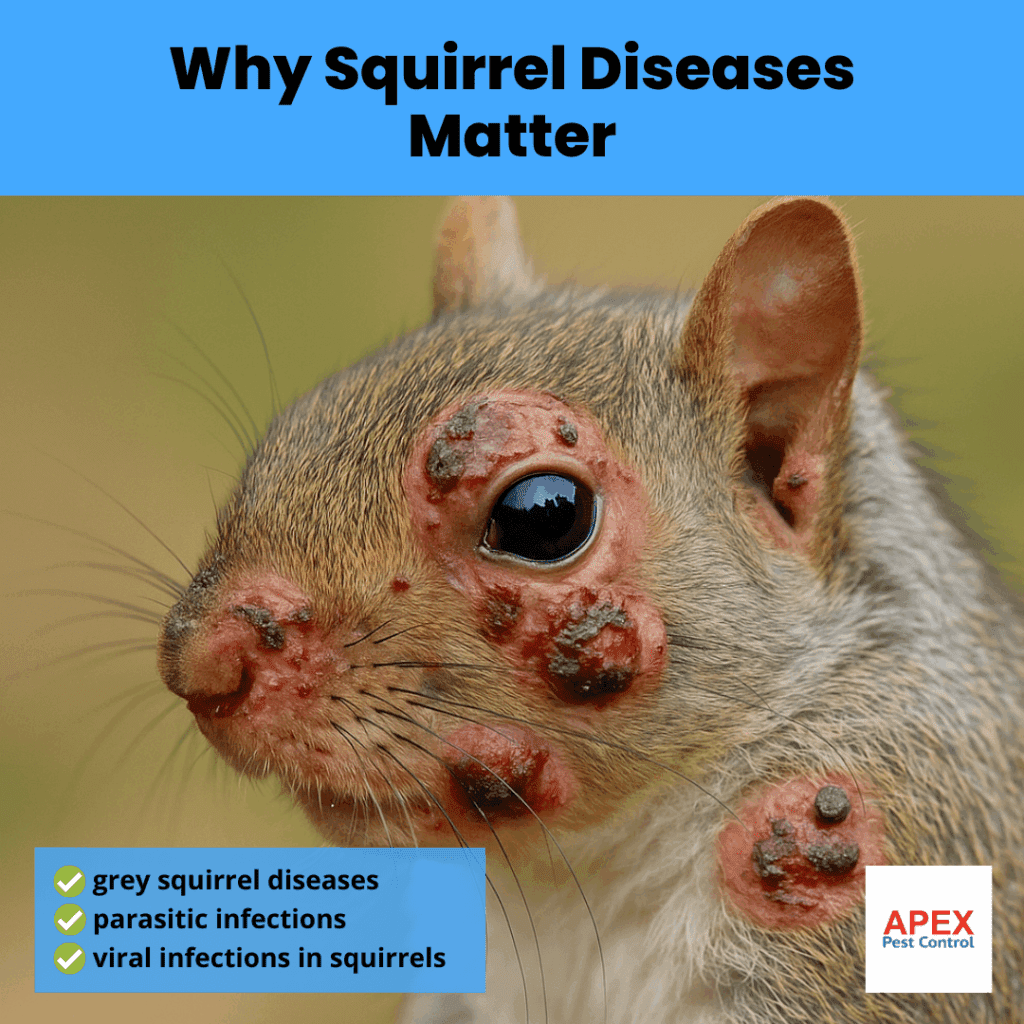
Why Squirrel Diseases Matter
In the United Kingdom, grey squirrels (Sciurus carolinensis) are tenacious, versatile, and common. However, they are vulnerable to several health problems, such as:
Parasitic infestations like mange and intestinal worms
Viral infections such as squirrelpox
Bacterial diseases including leptospirosis and tularaemia
Fungal infections like ringworm
In addition to harming squirrels, these conditions have the potential to disturb ecosystems, have an impact on native red squirrel populations, and, in rare instances, spread zoonotic diseases to people or pets.
Did you know?
More than 40 parasites can live in a single grey squirrel, and infections connected to severe illnesses may be found in their nests.
Act now: For a safe and legal inspection and treatment of squirrel-related hazards, get in touch with Apex Pest Control or another BPCA-certified pest management specialist.
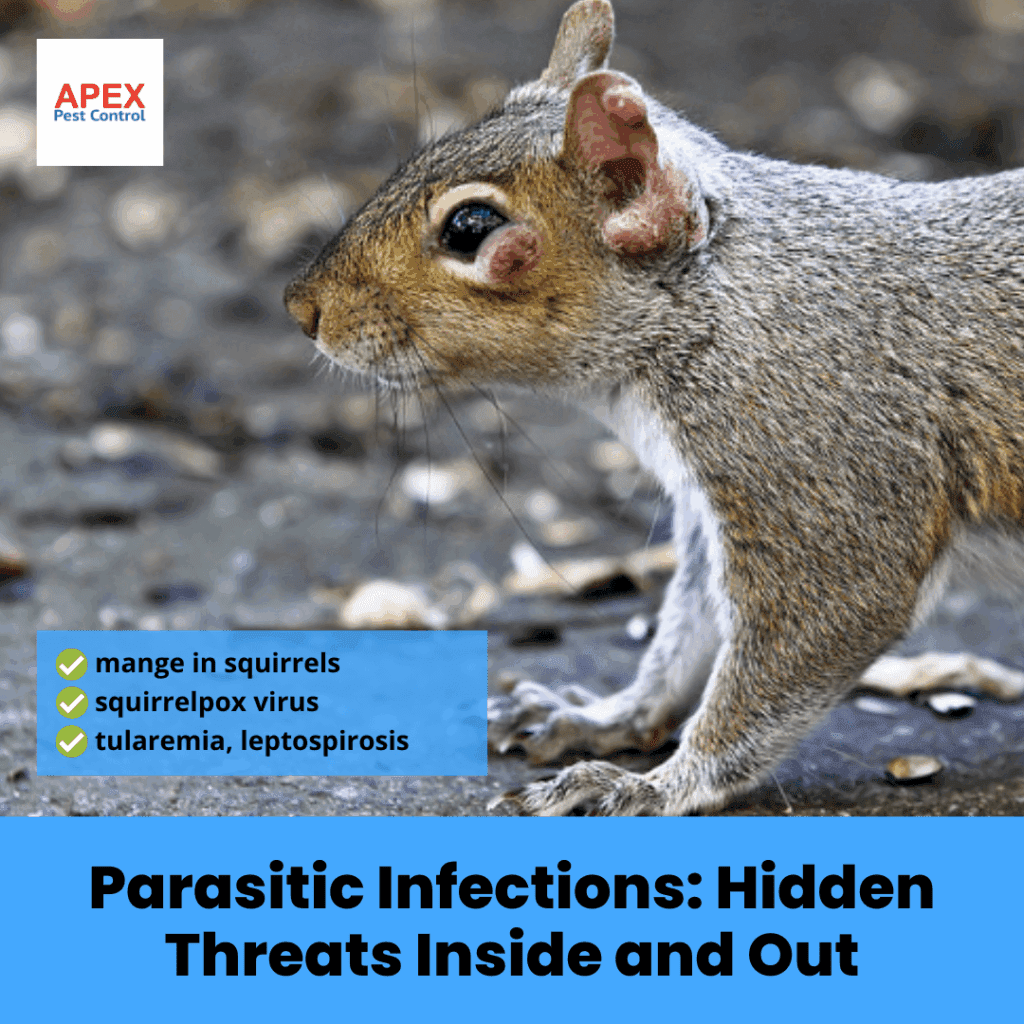
Parasitic Infections: Hidden Threats Inside and Out
Internal Parasites: Worms in the Gut
Parasitic worms such as roundworms (Ascaris spp.) and tapeworms (Taenia spp.) flourish inside a squirrel’s digestive tract, frequently going unnoticed until symptoms manifest. By stealing nutrition, these parasites lead to:
Weight loss and malnutrition
Digestive issues or intestinal blockages
Lethargy and reduced activity
These worms are acquired by squirrels by the consumption of polluted food or faeces-contaminated nesting materials. Particularly during the winter, severe infestations can weaken squirrels and reduce their chances of surviving.
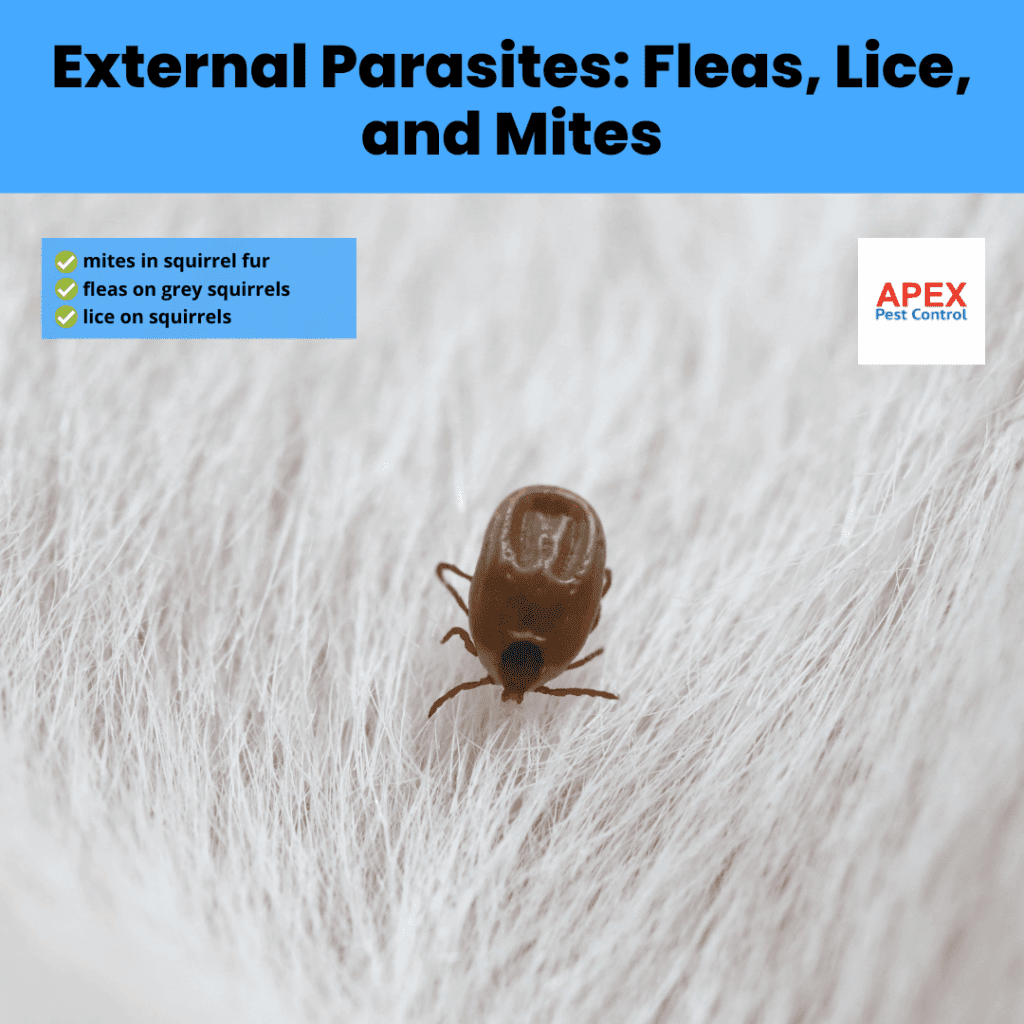
External Parasites: Fleas, Lice, and Mites
The thick fur of a squirrel serves as a refuge for external parasites such as:
Fleas (Ctenocephalides felis, Orchopeas howardi): These carry bacteria like Bartonella and jump between hosts.
Lice (Enderleinellus spp.): They cling to hair, causing intense itching.
Mites (Sarcoptes scabiei, Demodex): These trigger skin damage and hair loss.
The constant scratching of infested squirrels causes open sores and subsequent illnesses. Reduced foraging, dehydration, and anaemia are all consequences of high parasite burdens.
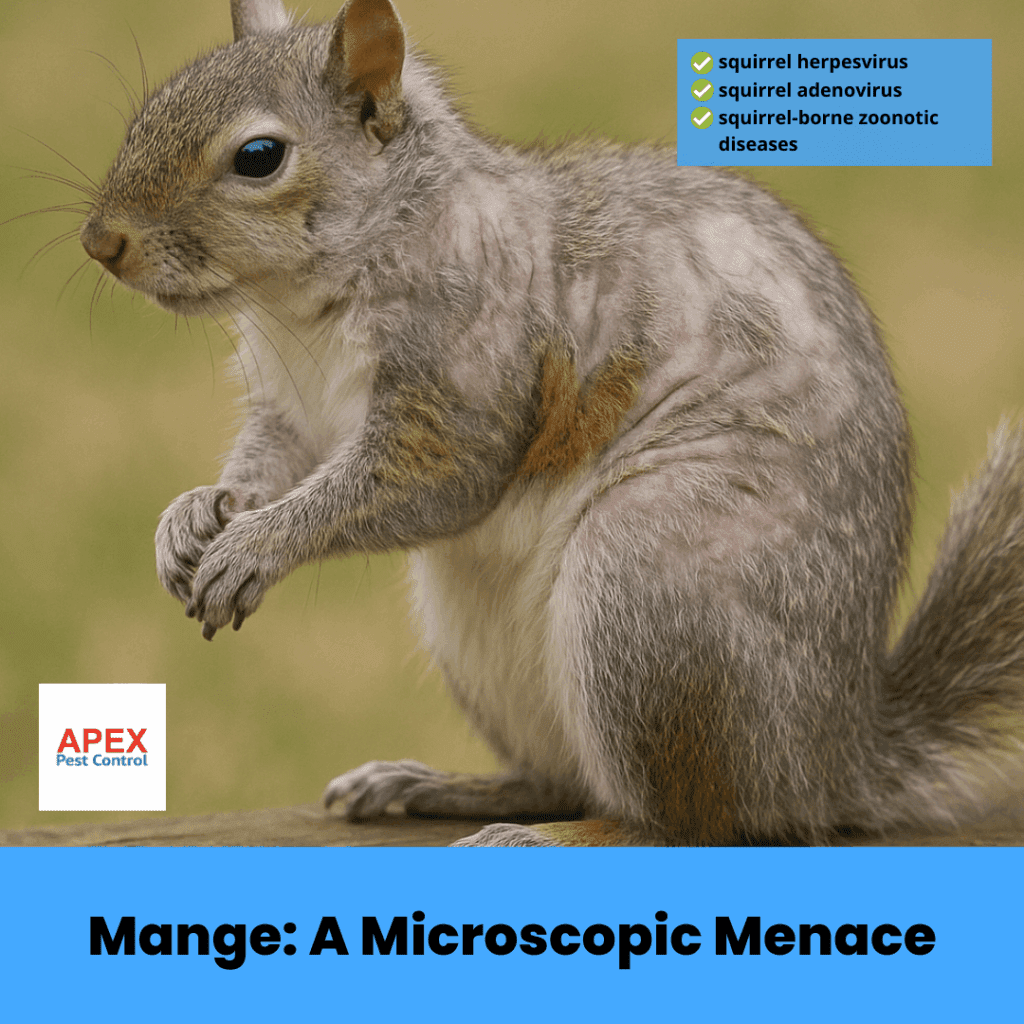
Mange: A Microscopic Menace
What Causes Mange?
Sarcoptes scabiei mites, which burrow into a squirrel’s skin and induce inflammation and intense itching, are the cause of mange. Among the symptoms are:
Patchy hair loss, starting around the head and shoulders
Crusty, thickened skin, often grey or white
Lethargy and emaciation due to disrupted foraging
To make their situation worse, mange-afflicted squirrels may rub against branches or scratch compulsively.
How Mange Spreads
Direct contact during social interactions or in shared nests is how mange is disseminated. In shared habitats, it may also have an impact on other species, like as dogs or foxes. In urban squirrel populations that are densely populated, outbreaks spread rapidly.
Spot an outbreak: Keep an eye out for bald-patched squirrels in colonies close to your house. Inform a certified wildlife rehabilitator of any encounters.
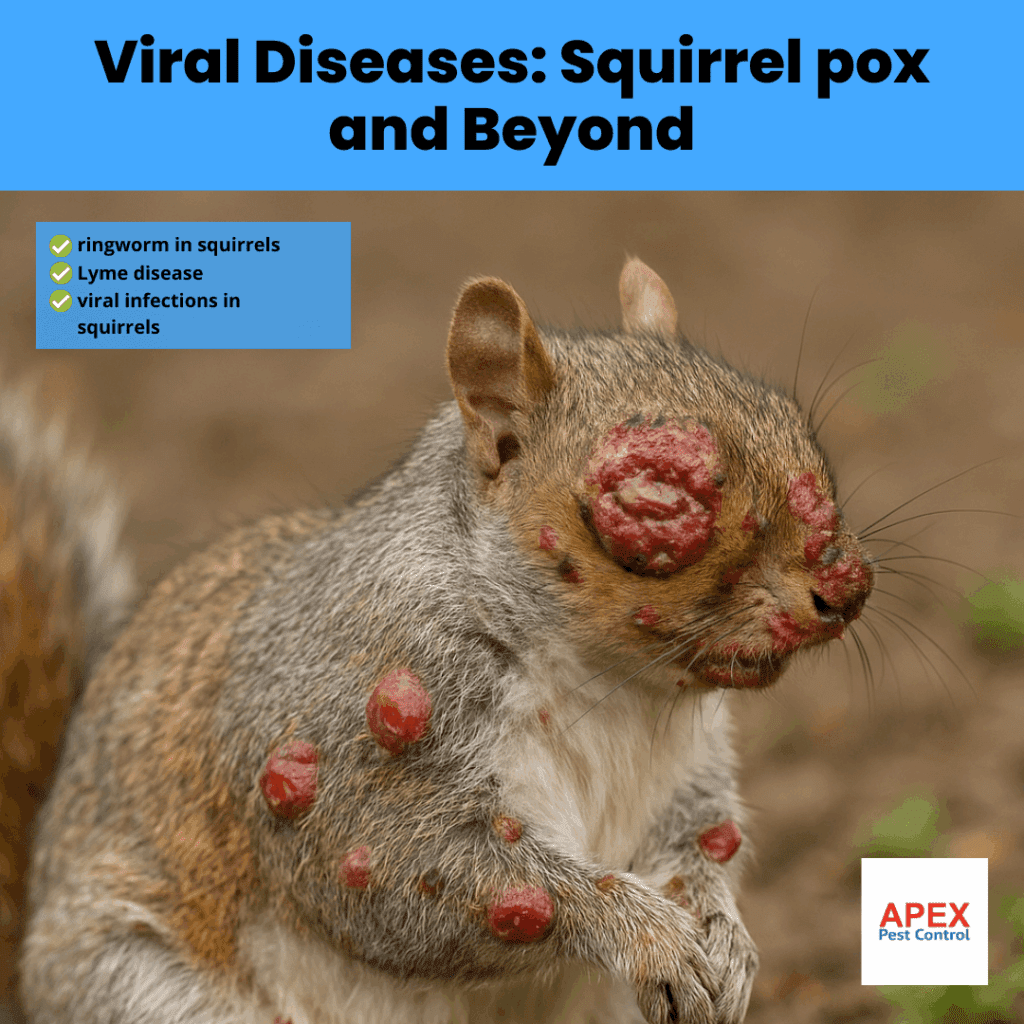
Viral Diseases: Squirrel pox and Beyond
Squirrel pox: A Devastating Threat to Red Squirrels
The poxvirus that causes squirrel pox kills native red squirrels (Sciurus vulgaris), but it usually doesn’t hurt grey squirrels, which serve as carriers. Red squirrel symptoms include:
Skin ulcers around the eyes, ears, and face
Swelling and crusting of lesions
Rapid decline and death within two weeks
Grey squirrels can transmit the virus by coming into close contact with one another or by sharing surfaces, such as feeders. According to the Red Squirrel Survival Trust, red squirrel populations in England and Wales have decreased due to this disease, falling from 3.5 million in the 19th century to less than 140,000 now.
Conservation efforts: Although there is currently no widely accessible vaccine to protect red squirrels, pilot vaccination programs are in place. Reporting sightings to nearby wildlife trusts will help save red squirrels.
Other Viruses: Herpesvirus and Adenovirus
Adenoviruses, which cause respiratory or digestive problems, and herpesviruses (ScHV-1), which cause mouth ulcers or lethargy, can infect squirrels. Red squirrels are more likely to die from these infections, but grey squirrels frequently carry them without showing any signs. In the UK, several factors make red squirrel displacement worse.
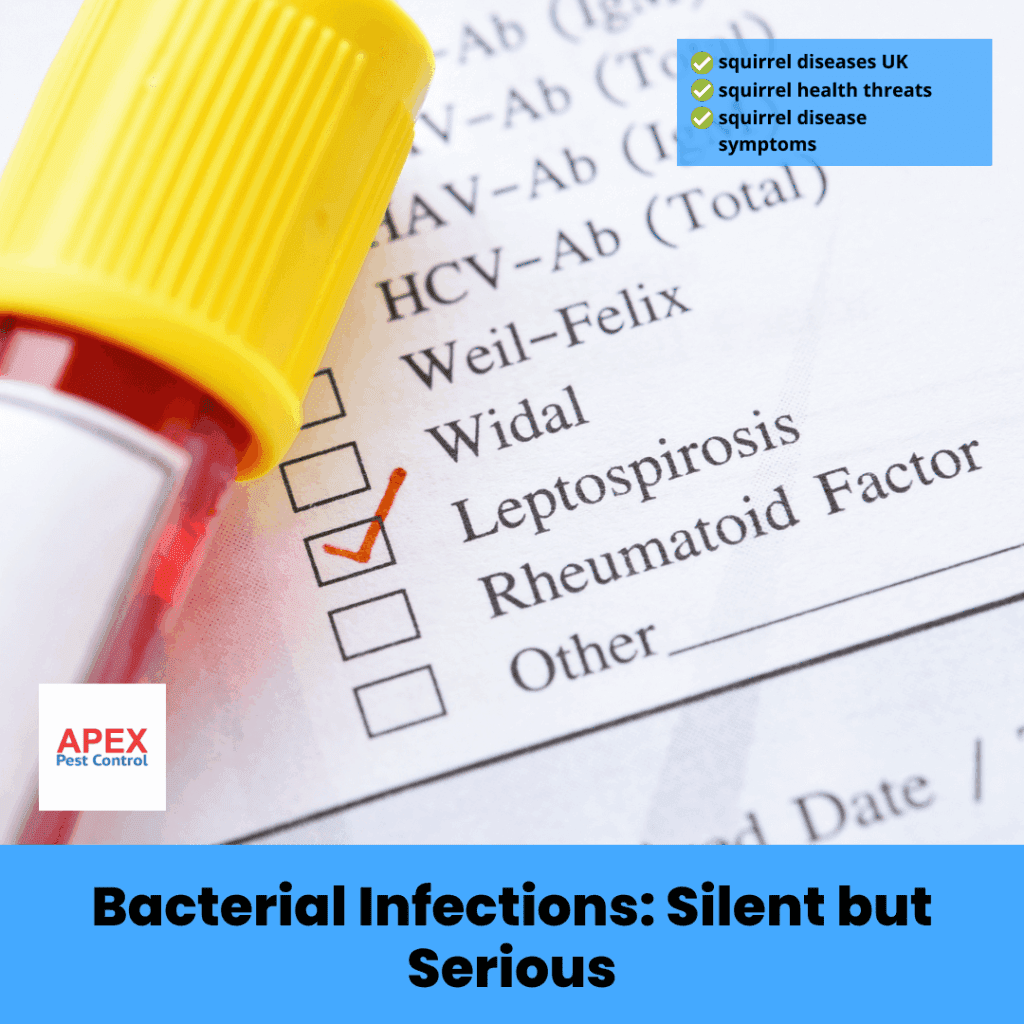
Bacterial Infections: Silent but Serious
Common Bacterial Threats
Through wounds or tainted food, bacteria such as Streptococcus species and Pasteurella multocida (pasteurellosis) infect squirrels, leading to:
Abscesses and inflammation
Respiratory issues or pneumonia
Neurological symptoms like head tilt or disorientation
Because of their dense populations and exposure to human trash, urban squirrels are more vulnerable.
Tularaemia: A Rare but Potent Risk
Tularaemia is an uncommon bacterial disease that affects squirrels and is brought on by Francisella tularensis. It spreads by way of:
Less than 200 human cases occur in the US each year, but if left untreated, tularaemia can produce serious symptoms like fever and enlarged lymph nodes. Take precautions: In wooded locations, apply bug repellent and refrain from handling dead squirrels.
Leptospirosis: A Waterborne Concern
Leptospirosis, which is caused by Leptospira interrogans, is transmitted through soil or water tainted with urine. Human symptoms include fever, aches in the muscles, and in extreme situations, damage to the kidneys or liver. Wet areas and urban parks raise the risk of transmission.
Prevention tip: To keep squirrels away from gardens, keep pet dishes clean every day and don’t leave standing water there.
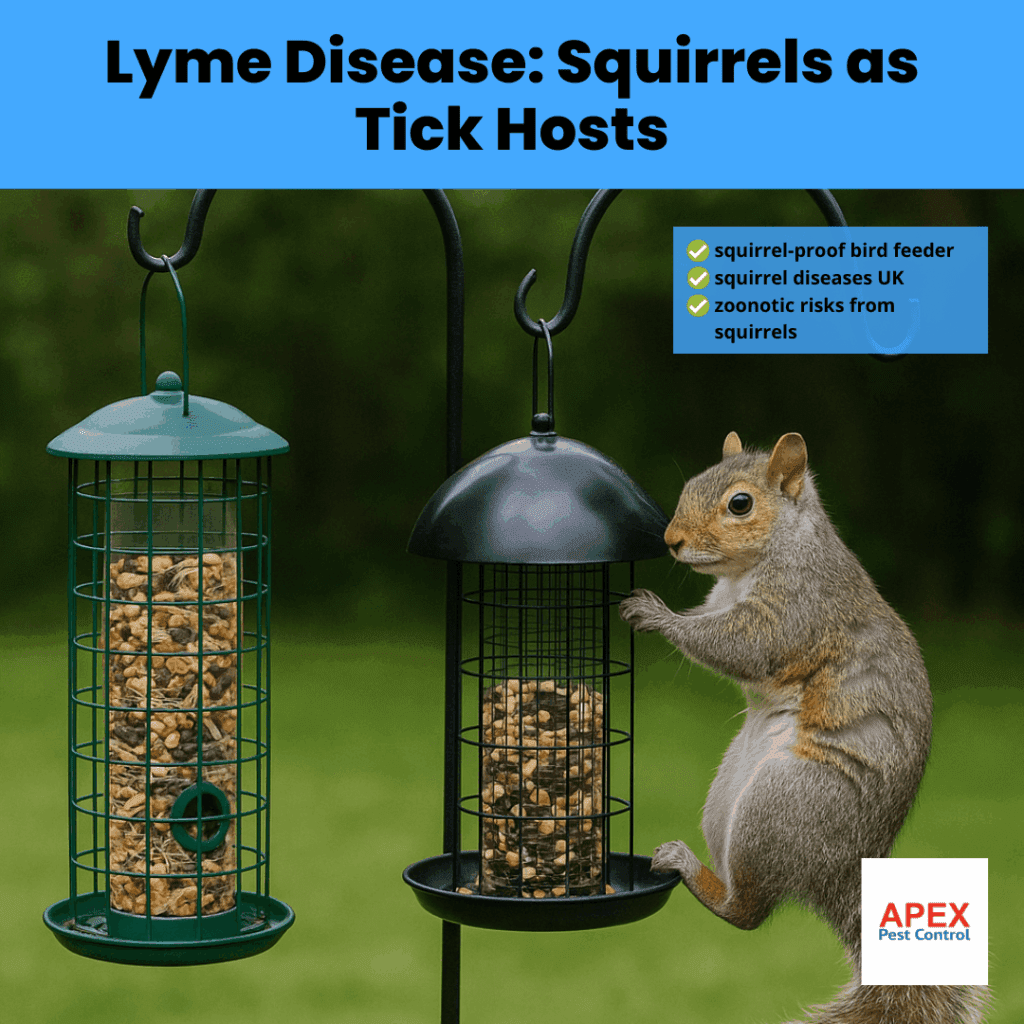
Lyme Disease: Squirrels as Tick Hosts
The bacterium that causes Lyme disease, Borrelia burgdorferi, can be carried by ticks (Ixodes ricinus in the UK), which are hosted by grey squirrels. In gardens and woodlands, squirrels maintain tick populations, which raises the danger of human exposure, even though mice are the main reservoirs.
Reduce tick encounters:
Clear brush piles and dense vegetation
Use squirrel-proof bird feeders
Apply tick preventives to pets
Check for ticks after outdoor activities
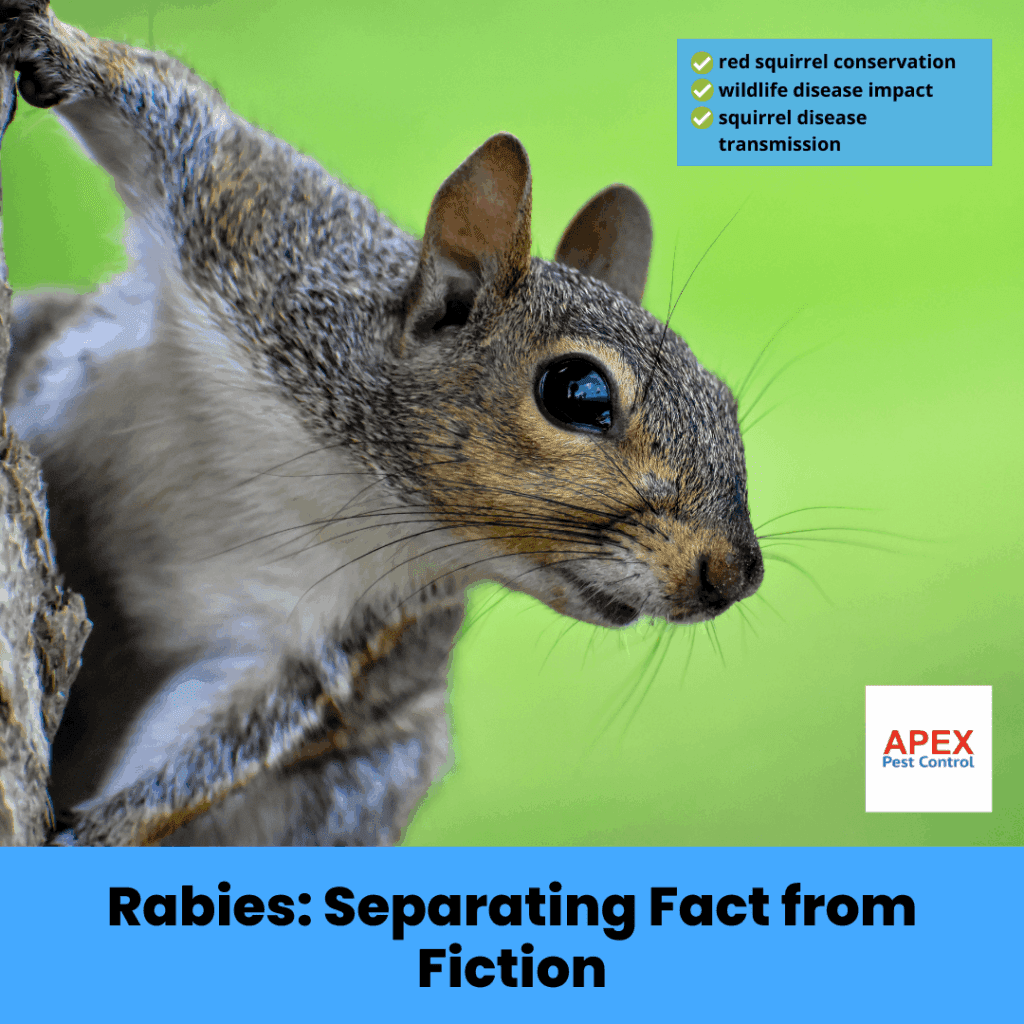
Rabies: Separating Fact from Fiction
According to the Animal and Plant Health Agency, the UK is regarded as rabies-free among terrestrial species, hence squirrels rarely carry the disease. In squirrels, parasites, injuries, or neurological disorders are more likely to cause erratic behaviour than rabies.
Key takeaway: Squirrels pose no significant rabies risk in the UK. Report unusual behaviour to a licensed wildlife rehabilitator for assessment.
Zoonotic Risks: Diseases That Can Spread to Humans
Squirrel-borne zoonotic diseases are rare but include:
Disease
Cause
Transmission
Human Symptoms
Tularaemia
Francisella tularensis
Tick bites, contact with infected animals
Fever, ulcers, swollen lymph nodes
Leptospirosis
Leptospira interrogans
Contaminated water or soil
Fever, muscle aches, kidney damage
Salmonella
Salmonella spp.
Faecal contamination
Diarrhea, fever, cramps
Ringworm
Fungal infection
Direct contact
Itchy, circular rash
Stay safe:
Wear gloves when handling squirrel feeders or nests
Wash hands thoroughly after outdoor activities
Avoid direct contact with wild squirrels
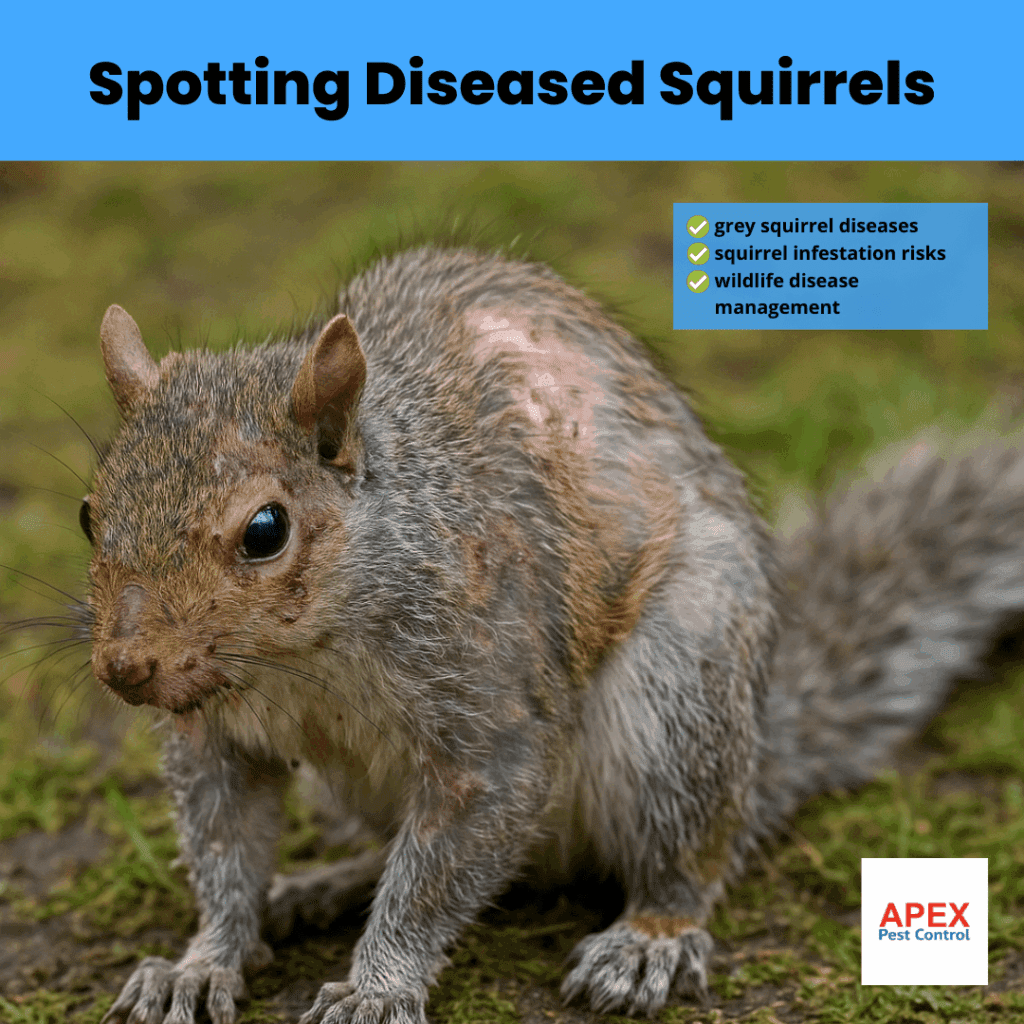
Spotting Diseased Squirrels
Squirrels in good health move quickly and are vigilant. Squirrels with illnesses may show:
Lethargy or unresponsiveness
Hair loss or open sores (e.g., mange, squirrelpox)
Erratic movements like circling or stumbling
Swollen abdomen or laboured breathing
What to do: Never try to cure sick squirrels on your own. For safe, compliant handling, get in touch with your local wildlife authority or a certified wildlife rehabilitator.
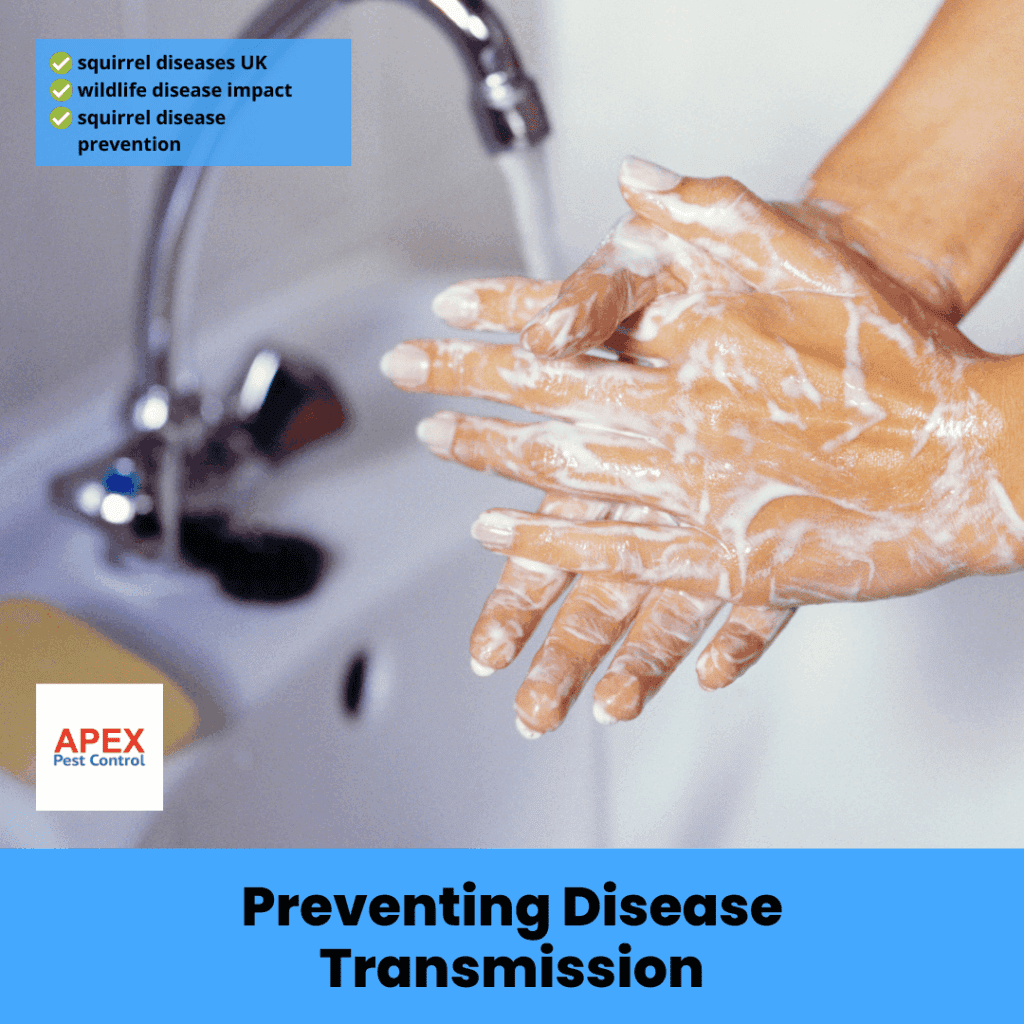
Preventing Disease Transmission
Personal Hygiene
Use disposable gloves when cleaning squirrel feeders or handling traps
Wash hands with soap for 20 seconds after contact with wildlife areas
Use alcohol-based sanitisers (60% ethanol) when water isn’t available
Home and Garden Tips
Clean feeders weekly with a 10% bleach solution (1 part bleach, 9 parts water), rinse thoroughly, and air-dry
Secure bins and compost to deter squirrels
Avoid hand-feeding to reduce bite risks
Protecting Pets
Apply vet-recommended flea and tick preventives
Supervise outdoor pets to prevent squirrel interactions
Clean outdoor pet bowls daily to avoid contamination
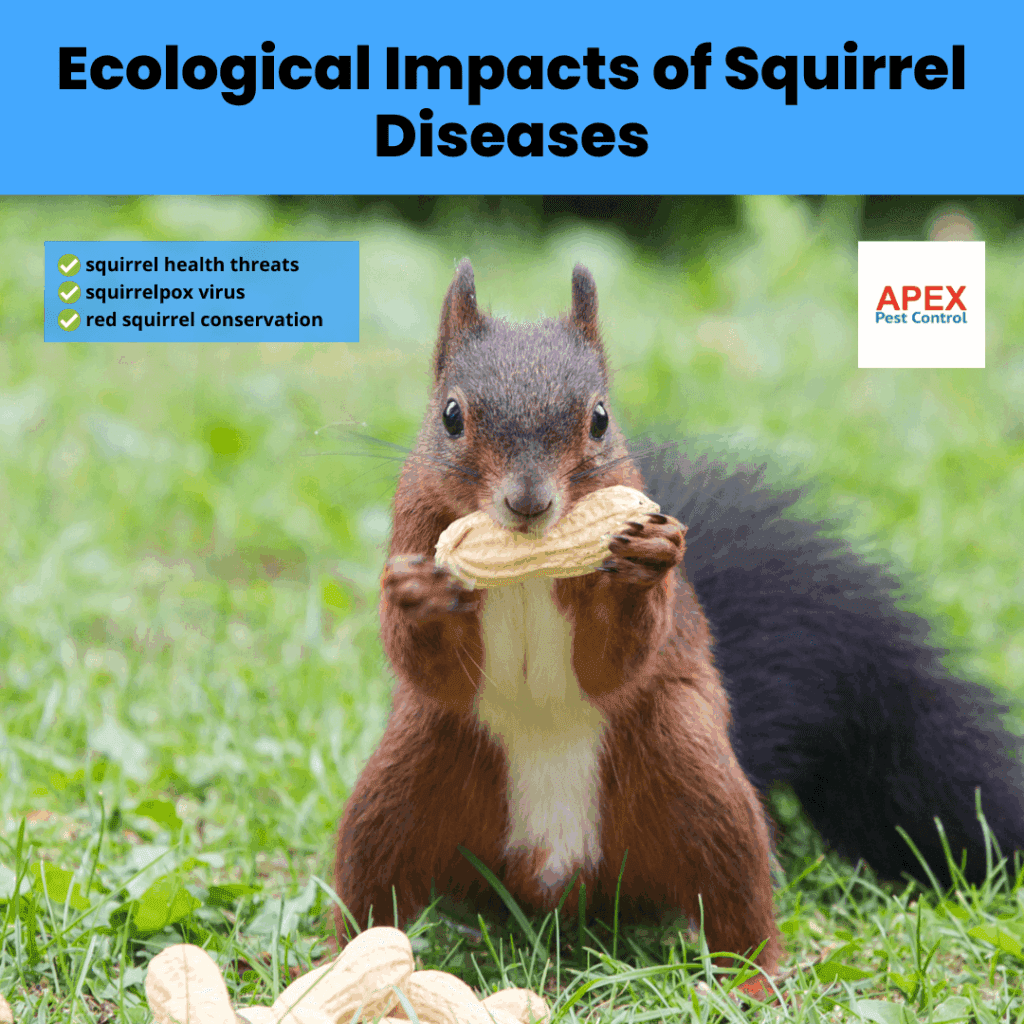
Ecological Impacts of Squirrel Diseases
Ecosystems undergo significant changes as a result of squirrel diseases:
Red Squirrel Decline: Squirrelpox, carried by grey squirrels, has reduced red squirrel populations by over 90% in some UK regions.
Climate Change: Warmer climates expand parasite ranges, increasing mange and tick-borne disease risks.
Support conservation: To help red squirrels recover, protect their native habitats and notify nearby wildlife trusts of any squirrel sightings.
Wildlife Rehabilitation: A Vital Role
Each year, thousands of sick or injured squirrels are treated by licensed wildlife rehabilitators who are subject to Natural England’s regulations. They:
Quarantine animals to prevent disease spread
Administer treatments like miticides for mange or antibiotics for infections
Ensure animals are fit for release or humane dispatch, per UK law
How to help:
Report sick squirrels to your local wildlife rehabilitator
Avoid feeding wildlife to reduce disease transmission
Support rehab centres with donations of supplies like linens or heat lamps
Legal and Humane Grey Squirrel Control
The Wildlife and Countryside Act of 1981 and the Invasive Alien Species Order of 2019 govern the management of grey squirrels, which are considered invasive species in the United Kingdom. Important rules consist of:
No release: It’s illegal to release trapped grey squirrels into the wild or allow them to escape.
Humane dispatch: Trapped squirrels must be humanely euthanised, adhering to the Animal Welfare Act 2006.
Licensing: Keeping grey squirrels as pets or for long-term rehabilitation requires a licence from Natural England.
Why choose professionals? BPCA-certified technicians are trained in legal, humane, and effective methods, ensuring compliance and safety.
Act now: If grey squirrels are nesting in your attic or causing damage, contact Apex Pest Control for a compliant, professional solution.
Frequently Asked Questions
Can I keep a grey squirrel as a pet in the UK?
No, unless you have a licence from Natural England or Natural Resources Wales. Keeping grey squirrels without permission is illegal.
Can I release a trapped grey squirrel?
No. Releasing grey squirrels into the wild is illegal under the Invasive Alien Species Order 2019. They must be humanely dispatched, per the Animal Welfare Act 2006.
Are squirrel-borne diseases a risk to my family?
Most squirrel diseases pose low direct risk, but ticks from nests can transmit Lyme disease in some areas. Use gloves and avoid handling wildlife.
How do I spot a squirrel infestation?
Look for scratching noises in the attics at dawn or dusk, shredded nesting materials, or chewed wires and insulation.
Why choose a BPCA-certified pest control company?
BPCA-certified technicians ensure legal, humane, and effective pest control, protecting your home and wildlife, in line with BPCA standards.
Take Control with Confidence
DIY remedies are insufficient to address grey squirrel infestations and related diseases. Timely action yields enduring outcomes, whether it is attic damage or zoonotic hazards. For BPCA-certified, compassionate, and legally compliant solutions that are customised to meet your needs, rely on Apex Pest Control.
For peace of mind and a qualified inspection, get in touch with us today.
How to Repair and Avoid Home Damage from Squirrels
Does your loft sound like it’s being scratched at night? It might be the grey squirrels. Due to their ability to chew through cables, build nests in insulation, and disturb gardens, these invasive rodents seriously harm homes in the UK. If their activities are not controlled, they may cause structural problems, health dangers, and fire threats, which might cost homeowners hundreds or thousands of dollars to fix.
This article helps you find squirrel problems, fix damage, and use do-it-yourself or expert methods to protect your property. Manage these pests appropriately to protect your house and help native red squirrels.
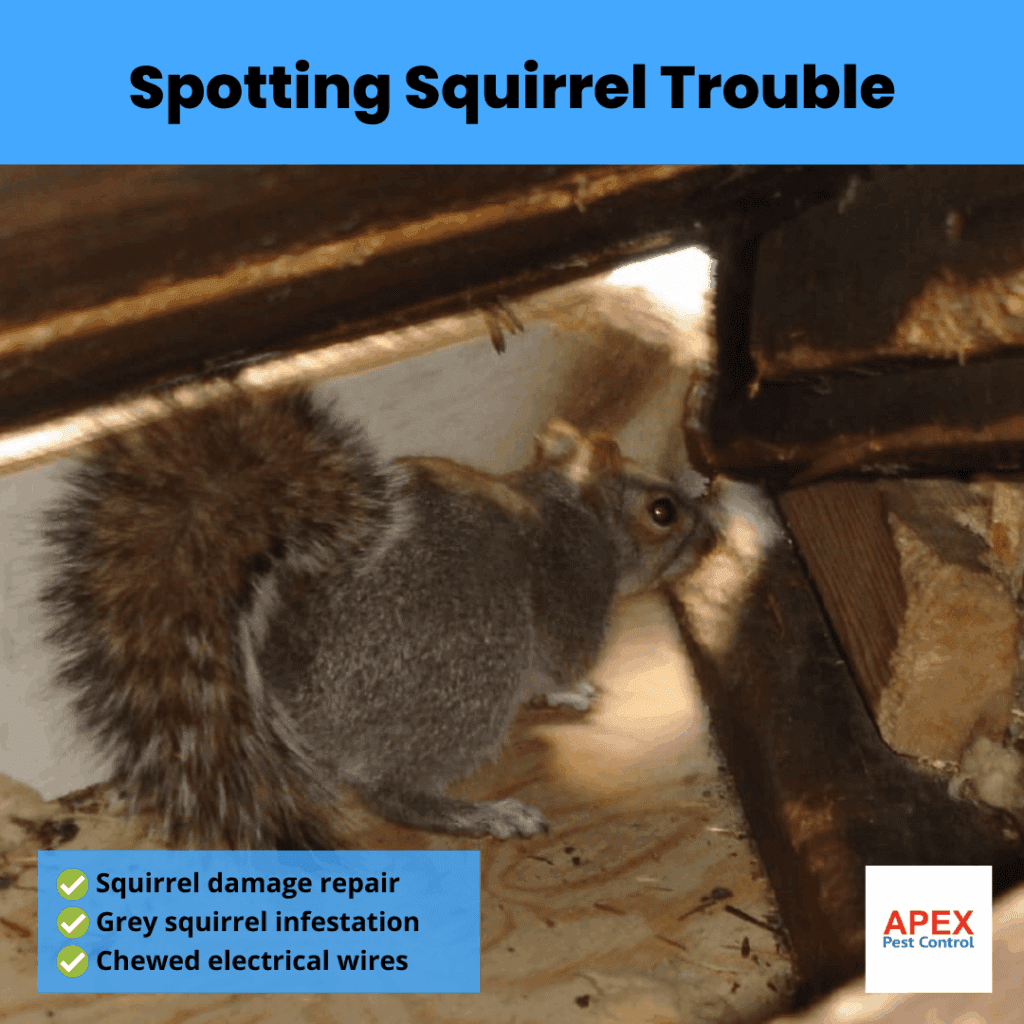
How to Spot Squirrel Problems?
Costly repairs can be avoided by detecting grey squirrels early. To verify an infestation, look for these telltale indicators.
Typical Squirrel Signs
Noises: Scampering, scratching, or gnawing in lofts or walls, especially at dawn and dusk.
Droppings: Larger and rounder than rat droppings, often with a central bulge, found in lofts or gardens.
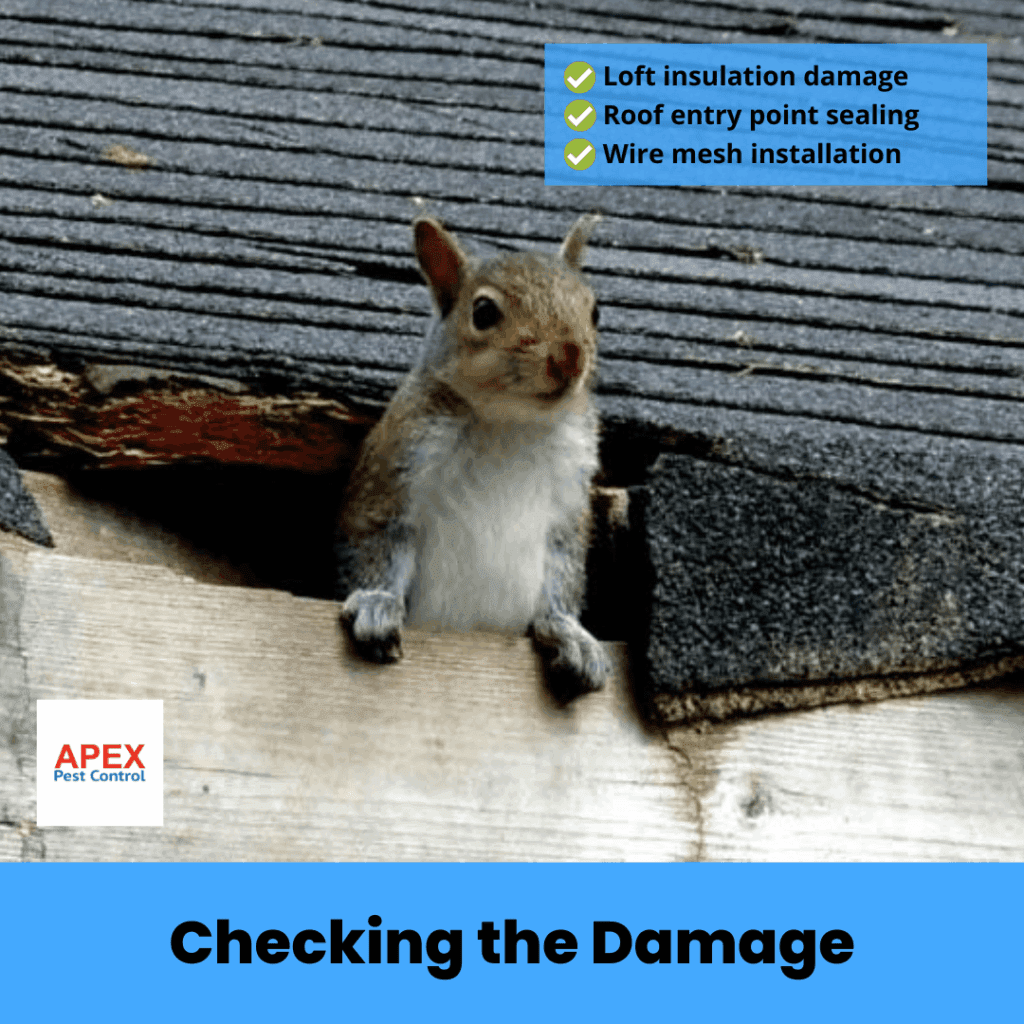
Damage: Chewed electrical wires, torn insulation, gnawed wood, or holes in roof tiles.
Squirrel Damage Locations
Lofts and Attics: Squirrels nest in high, safe spots, gnawing beams and wires, risking fire and structural damage.
Gardens and Yards: They dig up bulbs, strip bark, and eat seeds, harming plants and trees.
Walls and Insulation: Inside walls, squirrels shred insulation and chew cables, raising energy bills and fire risks.
Health Risks
Health risks could arise from the presence of salmonella and leptospirosis in squirrel urine and droppings. When cleaning up, wear protective gear because breathing in dust from their faeces might damage your lungs.
“If grey squirrels are not dealt with right away, they could become a health hazard in your loft.” — Expert in Pest Control, Dr. Jane Smith
Statistic: Homeowners in the UK may have to pay anything from £500 to £30,000 for squirrel damage, with electrical repairs frequently being the most costly.
Assessing the Damage
Before choosing to make repairs, it is essential to evaluate squirrel damage. Select between a safe do-it-yourself method or a professional inspection.
Employing a Professional
Reliable inspections are provided by wildlife management specialists.
Why It Helps: Professionals use tools like camera traps to locate hidden nests and entry points, leveraging their expertise in squirrel behaviour.
What They Do: They check lofts for nests, roofs for holes, and wires for chewing, while assessing health risks from droppings.
DIY Inspection
Put safety first when doing do-it-yourself inspections to prevent health hazards.
Stay Safe: Wear gloves and a mask to protect against diseases from droppings or urine.
Where to Look: Inspect lofts, corners, and baseboards indoors; check trees, fences, vents, and soffits outdoors for entry points.
Repairing Damage from Squirrels
Timely repairs stop additional harm. Take these actions to address gardens, access points, insulation, and sanitation.
Sealing Entry Points and Holes
Squirrels take advantage of the little openings. To prevent their re-entry, block them.
Use 16-gauge wire mesh, sheet metal, or hardware cloth to seal roof or wall holes.
Apply caulk for minor gaps, but consult a roofer for significant roof or soffit damage.
Tip: Professionals can install one-way exclusion funnels to allow squirrels to exit without returning.
Insulation Replacement
Energy expenses and health hazards are increased by torn insulation.
As soon as possible, replace any damaged insulation.
To ensure safety, hire experts to clean and disinfect places affected by urine.
Garden Restoration
Prevent squirrel damage to your garden.
Install squirrel-proof bird feeders to secure seeds.
Cover bulbs with galvanised mesh and plant squirrel-resistant species like daffodils or marigolds.
Use fencing or bamboo skewers to deter digging.
Sanitisation and Cleaning
Cleaning carefully is important since squirrel waste spreads diseases.
Use a 1:10 bleach solution or HSE-approved sanitiser on droppings and urine.
Vacuum dust while wearing a mask to avoid inhaling harmful particles.
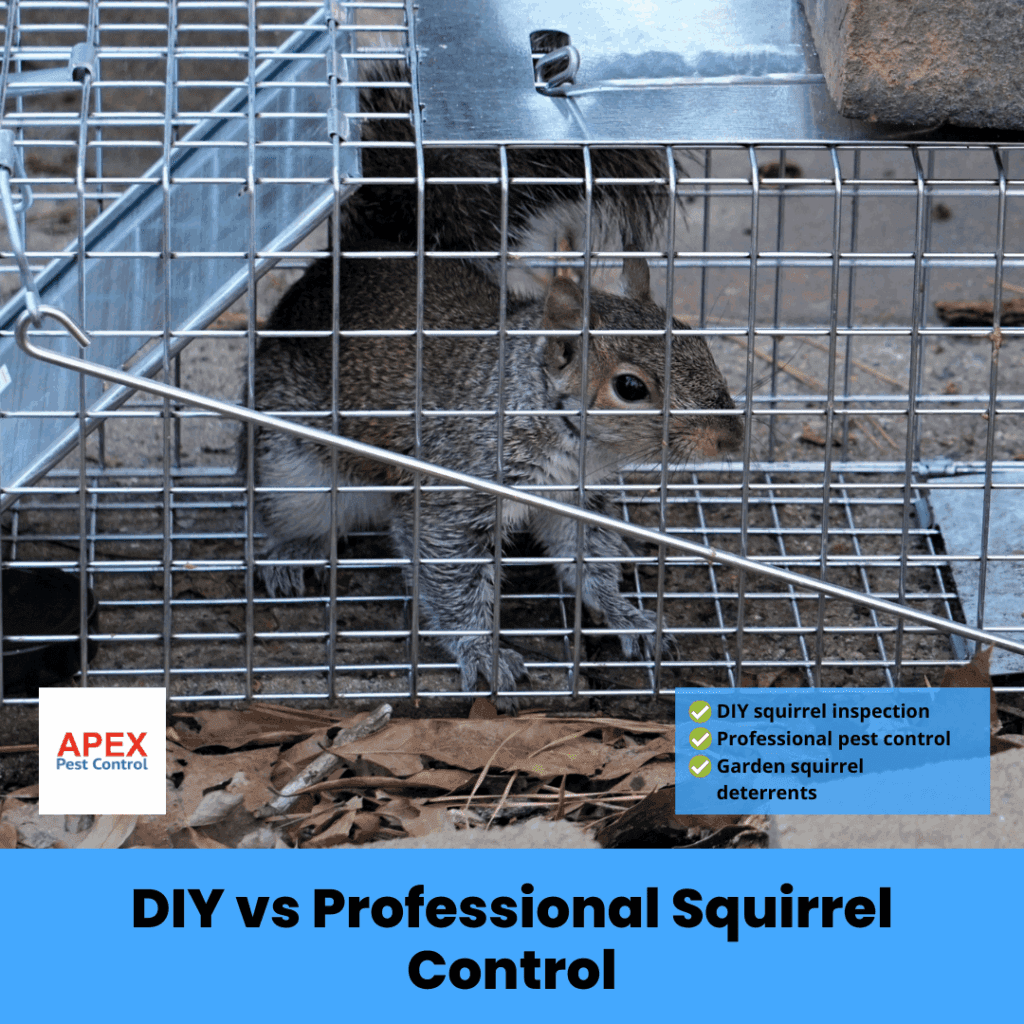
Professional vs. DIY Squirrel Control
Is it better to hire a professional or handle squirrels yourself? Both options are contrasted in this table.
Method
Pros
Cons
DIY
Cheap (e.g., £5 for cayenne pepper spray).Start right away.Eco-friendly options like peppermint.
Risky (disease exposure without gear).Temporary fixes may fail.Illegal trapping can lead to fines.
Professional
Expert removal with one-way doors.Follows UK laws for humane dispatch.Long-term prevention tips.
Costly (£200–£1,000).May need multiple visits.
Statistics: Depending on the extent of the infestation, professional squirrel removal might cost anywhere from £200 to £1,000.
Eliminating Squirrels Permanently
Time and money can be saved by preventing squirrel infestations. Make use of these complying, environmentally responsible actions.
Natural Deterrents
Certain textures and smells are avoided by squirrels.
Spray cayenne pepper and water or plant mint in gardens.
Scatter coffee beans, human hair, or blood meal near plants.
Tip: Reapply after rain for effectiveness.
Commercial Deterrents
Additional protection is provided by store-bought remedies.
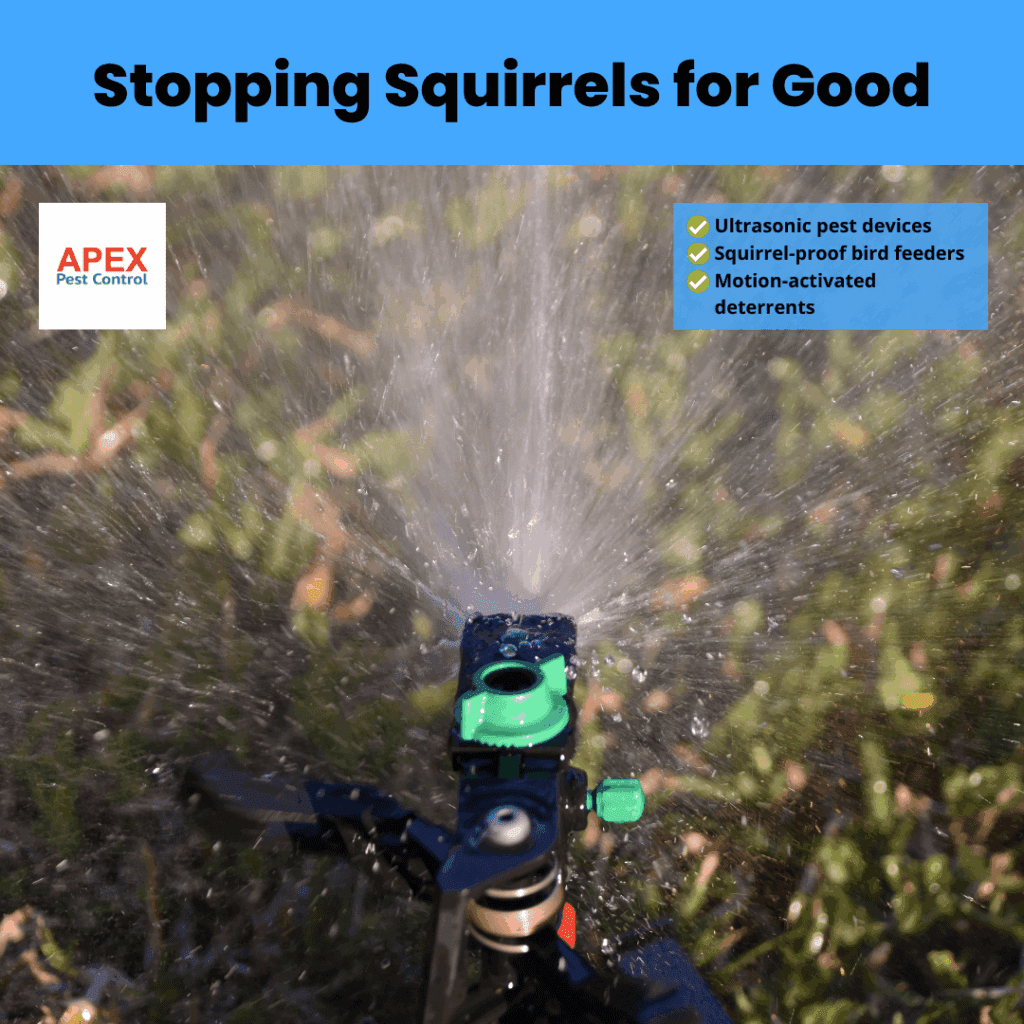
Motion-activated sprinklers startle squirrels with water bursts.
Ultrasonic devices emit sounds inaudible to humans but irritating to squirrels.
Frequent Inspections
Infestations are avoided with routine care.
Trim tree branches near roofs to block access.
Inspect vents, chimneys, and eaves for gaps in spring and autumn.
Early action can save £500 to £30,000 by stopping damage early.
Legal Requirements in the UK
According to UK law, grey squirrels are invasive and must be strictly complied with.
The Invasive Alien Species Order 2019 prohibits releasing trapped grey squirrels.
Humane dispatch is mandatory, typically handled by licensed professionals to avoid penalties.
Ecological Note: Controlling grey squirrels protects native red squirrels and woodlands.
When Should You Hire an Expert?
Professional intervention is necessary in certain cases. Speak with a certified pest control professional if you observe:
Weak roofs or walls from gnawed beams.
Chewed electrical wires, increasing fire risk.
Urine-stained ceilings or contaminated water tanks.
Why Experts Are Effective
Experts certified by the BPCA settle disputes in a safe and lawful manner.
They use box traps or one-way doors for humane removal.
They repair damage and provide prevention advice.
They ensure compliance with the Wildlife and Countryside Act 1981 and Wild Mammals (Protection) Act 1996.
Choosing a Provider
Pick an established pest control business.
Look for BPCA or RSPH accreditation, insurance, and positive reviews.
Ask about humane methods and prevention guarantees.
Tip: Confirm they use exclusion funnels for lasting results.
Common Enquiries Regarding Squirrel Damage
What scents put squirrels off?
Grey squirrels stay away from ammonia, chilli pepper, and peppermint oil. Sprays or wet cotton balls should be placed next to plants, lofts, and entryways. If it rains, reapply for optimal effects. Other pest management techniques are enhanced by these non-toxic, compassionate deterrents.
How much does it cost to repair squirrel damage?
Minor insulation repairs cost £500, whereas substantial repairs to asbestos ceilings, wiring, or roof timbers cost £30,000. An expert survey yields a precise estimate.
Are squirrels able to start fires?
Indeed. In order to control tooth growth, squirrels gnaw wires, exposing cables that could arc or ignite and start loft fires. This risk is decreased by routine proofreading and inspections.
Do squirrels pose a health risk to me?
Leptospirosis and salmonella can be found in the urine and droppings of squirrels. For a safe clean-up, use personal protective equipment (PPE) or employ a certified pest controller.
How can I make my garden squirrel-proof?
Use squirrel-proof feeders, grow daffodils, and cover bulbs with galvanised mesh. To limit access, secure compost containers and prune branches close to rooftops.
Is releasing grey squirrels permitted by law?
No, it is illegal to release caught grey squirrels under the 2019 Invasive Alien Species Order. To preserve native animals, they must be sent out humanely by qualified people.
How can I tell if my loft is home to squirrels
At dawn or dusk, listen for gnawing or scratching. Look for nesting materials, chewed wires, or droppings. Their presence is verified by a qualified inspection.
Squirrel Behaviour: The Secret to Successful Grey Squirrel Pest Control in the UK
In UK parks, urban gardens, and woodlands, grey squirrels are a common sight. Despite their endearing appearance, humane, legal, and efficient pest treatment requires an understanding of their conduct.
The species, habitats, behaviours, and behavioural patterns of grey squirrels that influence legal pest control methods in the UK are all covered in this extensive book.
Understand the Species and Habitats of Squirrels
Squirrel Types in the United Kingdom
Eastern Grey Squirrel (Sciurus carolinensis): Non-native and invasive, the grey squirrel has become dominant across much of the UK, outcompeting the native red squirrel.
Red Squirrel (Sciurus vulgaris): Native but now endangered, mainly due to competition and disease spread by grey squirrels.
Other Species: Flying squirrels, prairie dogs, and similar rodents are not found in the UK.
Where Do Squirrels Live?
Areas that provide food and shelter are ideal for grey squirrels, including:
Deciduous woodlands and mixed forests
Urban parks, rooftops, lofts, and gardens
Tree canopies, loft spaces, and chimneys (for nesting, known as “dreys”)
Did you know?
Both temporary and permanent dreys are constructed by grey squirrels, frequently in attic spaces or on high tree forks.
Important Patterns of Behaviour
Everyday Activities
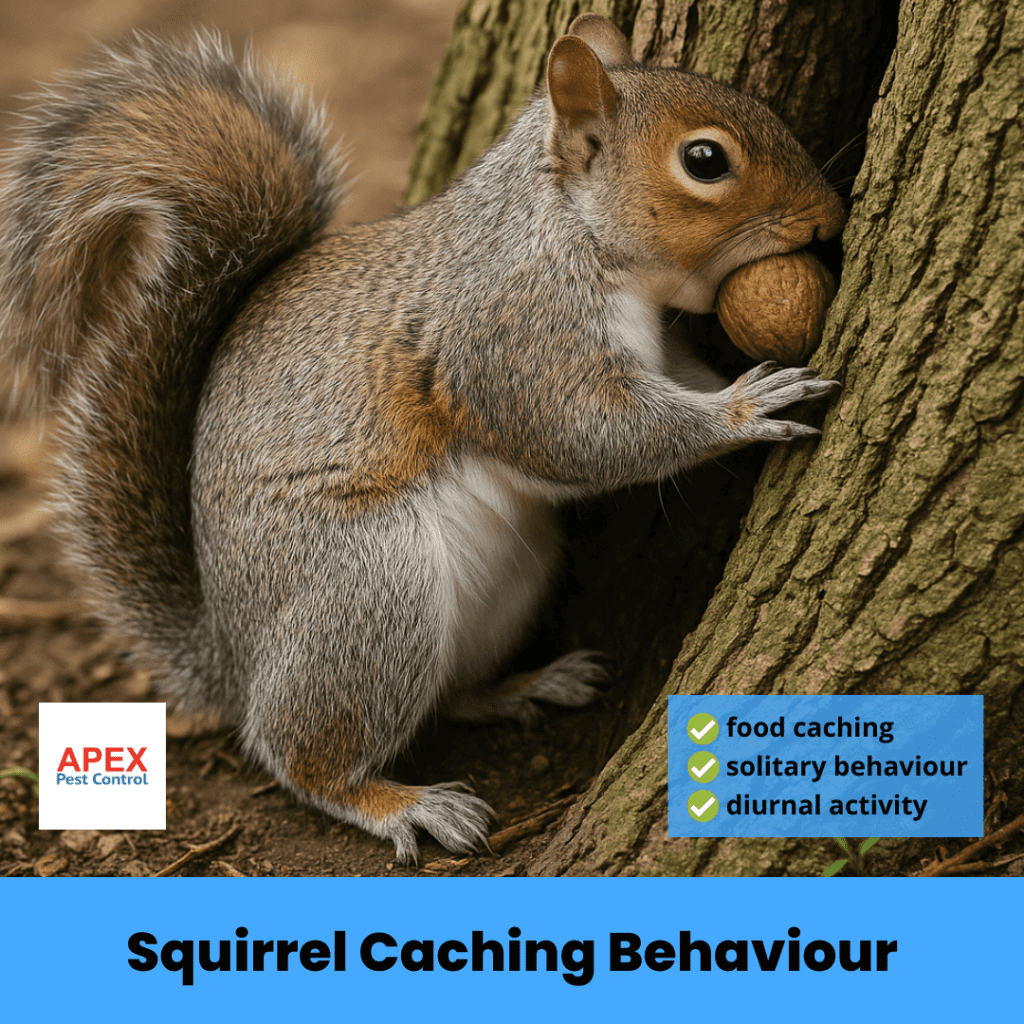
Grey squirrels are active during the day since they are diurnal. Typical days for them consist of:
Early morning foraging
Midday resting
Late afternoon food storage and return to nests
Caching and Feeding
As opportunistic foragers, grey squirrels consume:
Nuts (acorns, hazelnuts)
Seeds, bark, fruit, fungi
Occasionally bird eggs and insects
For winter recovery, they store food in tree hollows or bury it in the ground.
Signals and Communication
Squirrels communicate using:
High-pitched alarm calls to warn of predators
Tail flicking to signal aggression, fear, or alertness
“The complexity of squirrel alarm cries is more than previously believed. They are able to convey direction, danger kind, and urgency. – Online Wildlife”
Mating and Social Behaviour
Largely solitary except during mating season
Dominance hierarchies influence territory and food access
Females raise young (called “kits” or “pups”) alone, usually in spring and summer
Why the UK Is Affected by Grey Squirrels?
Impact Area
Description
Ecological
Outcompete native red squirrels for food and habitatTransmit squirrelpox virus, deadly to red squirrelsReduce woodland biodiversity and disrupt regeneration by stripping bark from trees, leading to tree death and loss of habitat for other species
Economic
Estimated annual cost of £37 million in England and Wales due to lost timber value, reduced carbon sequestration, and control measuresDamage to commercial forestry, orchards, and crops
Structural Damage
Chew through loft insulation, electrical wiring, timber, and property structuresAccess attics, roof spaces, and damage soffits and fascias
Garden & Agricultural Damage
Dig up bulbs and cormsSteal bird food and strip bark from ornamental and fruit treesDamage fruit and maize crops
Wildlife Impact
Prey on birds’ eggs and nestlings, impacting some woodland bird speciesCompete with other small mammals (e.g., hazel dormouse) for food resources
Noise & Nuisance
Create daytime noise in attics and roof spacesLeave droppings and nest
Legal Aspects of Squirrel Management
The 2019 Invasive Alien Species (Enforcement and Permitting) Order includes grey squirrels on its list. In the United Kingdom:
Releasing a grey squirrel that has been trapped is against the law. Grey squirrels must be humanely released if they are caught.
It is highly advised to seek professional help to guarantee both compassionate treatment and legal compliance.
Source: BPCA: Grey Squirrel Control
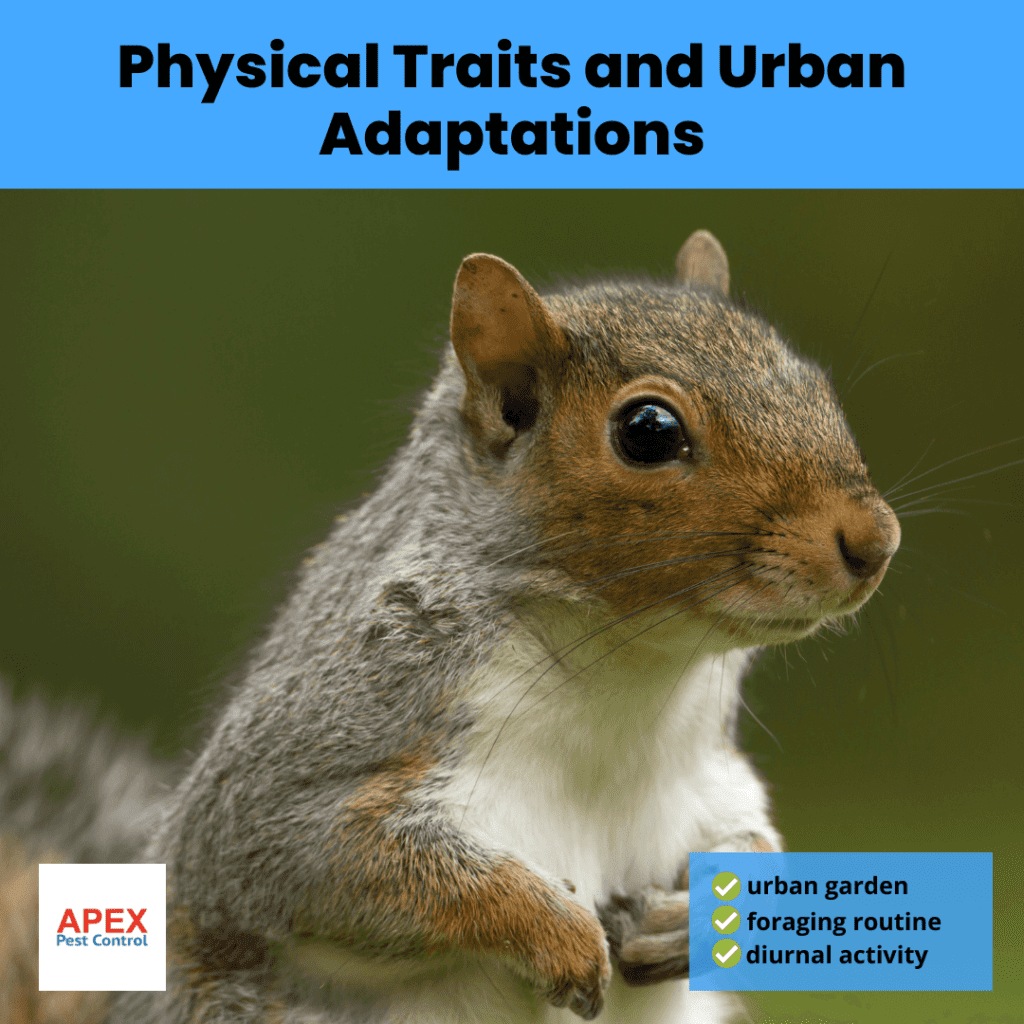
Physical Characteristics and Urban Adjustments
Both urban and rural settings are suitable for grey squirrels:
Strong hind legs for jumping
Sharp claws for climbing
Constantly growing incisors for gnawing
Long, bushy tail for balance and warmth
Lofts and bird feeders are particularly appealing in urban areas since there is an abundance of food and nesting chances.
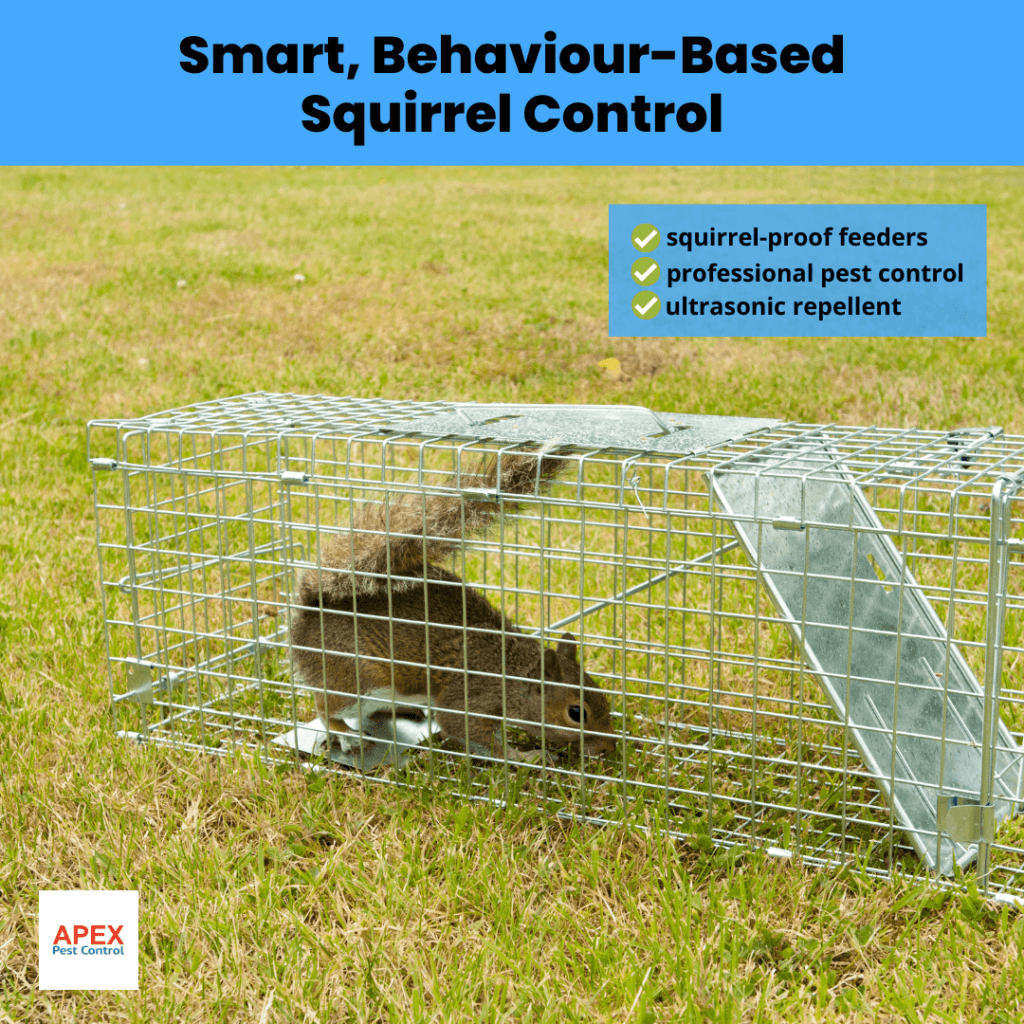
Intelligent, Behavior-Based Squirrel Management
Why Behaviour Matters
Effective squirrel control requires understanding:
When they are active: Daylight hours
Where they nest: High, quiet areas like lofts and trees
What they eat and hoard: Nuts, seeds, suet
This knowledge helps you plan strategic, humane, and legally compliant interventions.
Prevention Tips
Seal roof gaps and soffits larger than 25mm
Install metal mesh and exclusion devices
Prune overhanging tree limbs
Use squirrel-proof bird feeders
Keep gardens tidy to reduce attractants
DIY vs Professional Control
Method
Pros
Cons
DIY Deterrents
Lower costNon-lethal and low-risk for householdersEasy to implement (e.g., exclusion, deterrent sprays, squirrel-proof feeders)
Often ineffective for established infestationsMay not address root causes (entry points, food sources)Does not resolve legal obligations for humane controlCannot legally trap and release grey squirrels (illegal under UK law)
Professional Pest Control
Ensures compliance with UK laws and humane dispatch requirementsBPCA or RSPH qualified techniciansEffective long-term solutions and prevention adviceRisk assessment and safe use of approved methods
Higher upfront costRequires scheduling and property access
“Without addressing entry points and behaviour, squirrel control is a losing battle.” — BPCA Certified Technician
Facts About Squirrels: Frequently Asked Questions
How long do grey squirrels live?
Most wild grey squirrels live 2–4 years, though they can reach 10–12 years in ideal conditions.
Can squirrels swim?
Yes, grey squirrels can swim, using their tails for steering, though they generally avoid water.
What are baby squirrels called?
They are known as “kits” or “pups.”
Are squirrels nocturnal?
No, grey squirrels are diurnal and active during the day.
What is a group of squirrels called?
A group is called a “scurry” or “dray.”
How do I know if I have squirrels in my loft?
Look for gnawed timbers, rodent droppings, and daytime scratching noises.
Can I remove a squirrel myself in the UK?
You must comply with UK law: it is illegal to release a captured grey squirrel. Humane dispatch is required, and professional help is strongly advised.
What’s the best deterrent for garden squirrels?
Use capsaicin-based sprays, ultrasonic repellents, and squirrel-proof feeders.
Summary and Final Thoughts
Comprehending the behaviour of grey squirrels is essential for ethical, efficient, and lawful pest control in the UK. Understanding their social patterns, routines, and adaptability will help you take proactive measures to save native species, your garden, and your house.
For skilled, legally compliant assistance, get in touch with Apex Pest Control in South Yorkshire, a BPCA-certified and NPTA-registered pest control company.











 Apex Pest Control