
Expert Remedies for Chronic Grey Squirrel Issues: Squirrel Removal Services
The UK’s escalating grey squirrel problem

Infestations of grey squirrels are becoming more widespread in the UK, according to an increase in reports from both business owners and residents. Grey squirrels (Sciurus carolinensis), which were brought from North America in the 19th century, have rapidly adapted to living in both urban and rural areas.
By taking advantage of openings in structures, these invasive rats commonly target attics, lofts, and roof voids.
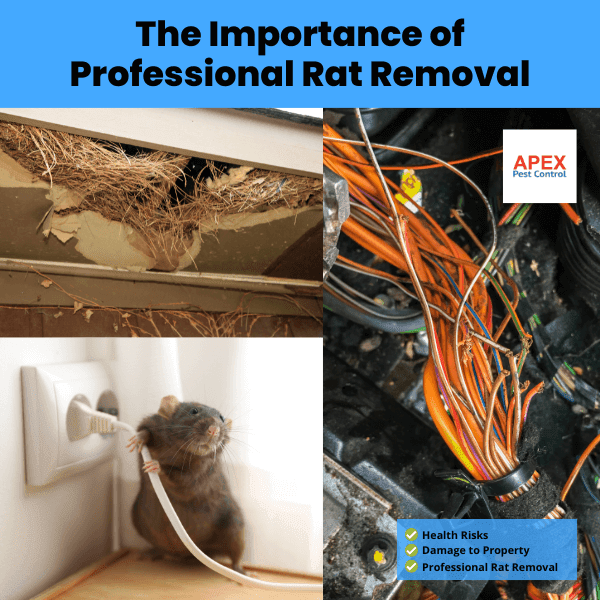
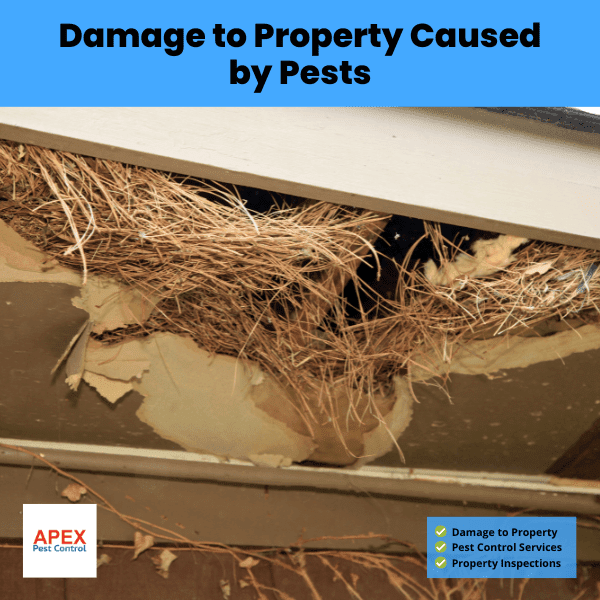
Once inside, they frequently cause costly damage by chewing through plumbing, electrical cables, and wood. Their urine and droppings pollute stored goods and insulation. Early intervention lowers expenses and lowers the risk of fire or health problems by preventing minor invasions from developing into full-blown infestations.
Identify the Symptoms of an Infestation of Squirrels

Squirrels frequently build their nests beneath roof tiles, in cavity walls, or in loft areas. Being diurnal, they are noisy from dawn till sunset and active during the day.
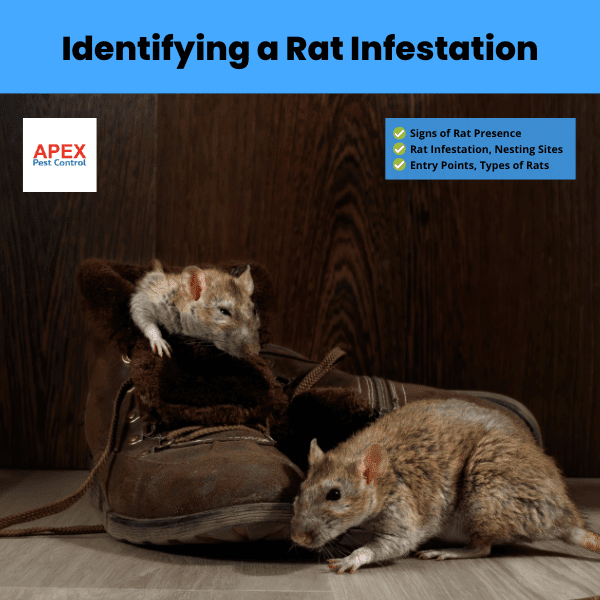
Among the indicators are:
- Scratching, scurrying, or gnawing sounds overhead
- Droppings near insulation or beams
- Nesting materials like shredded paper or fabrics
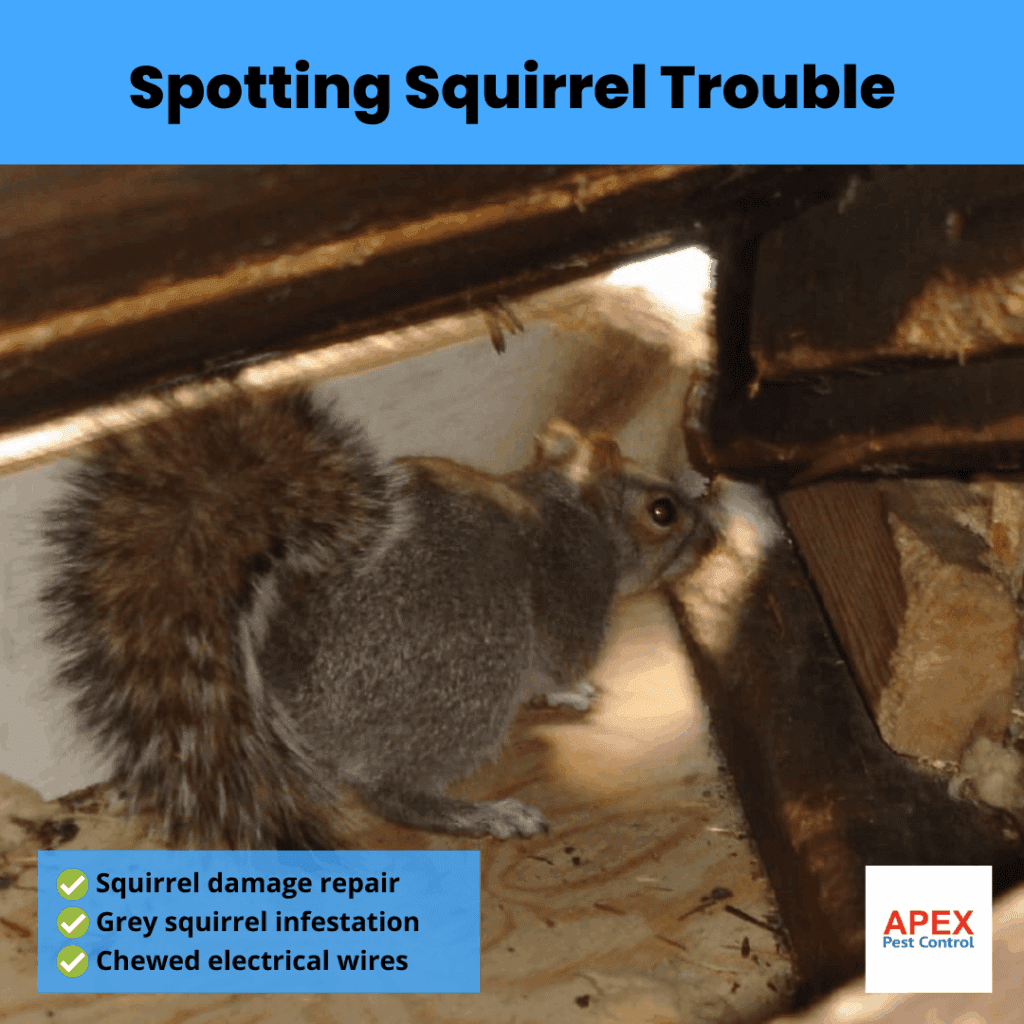
- Damaged insulation or chewed wires
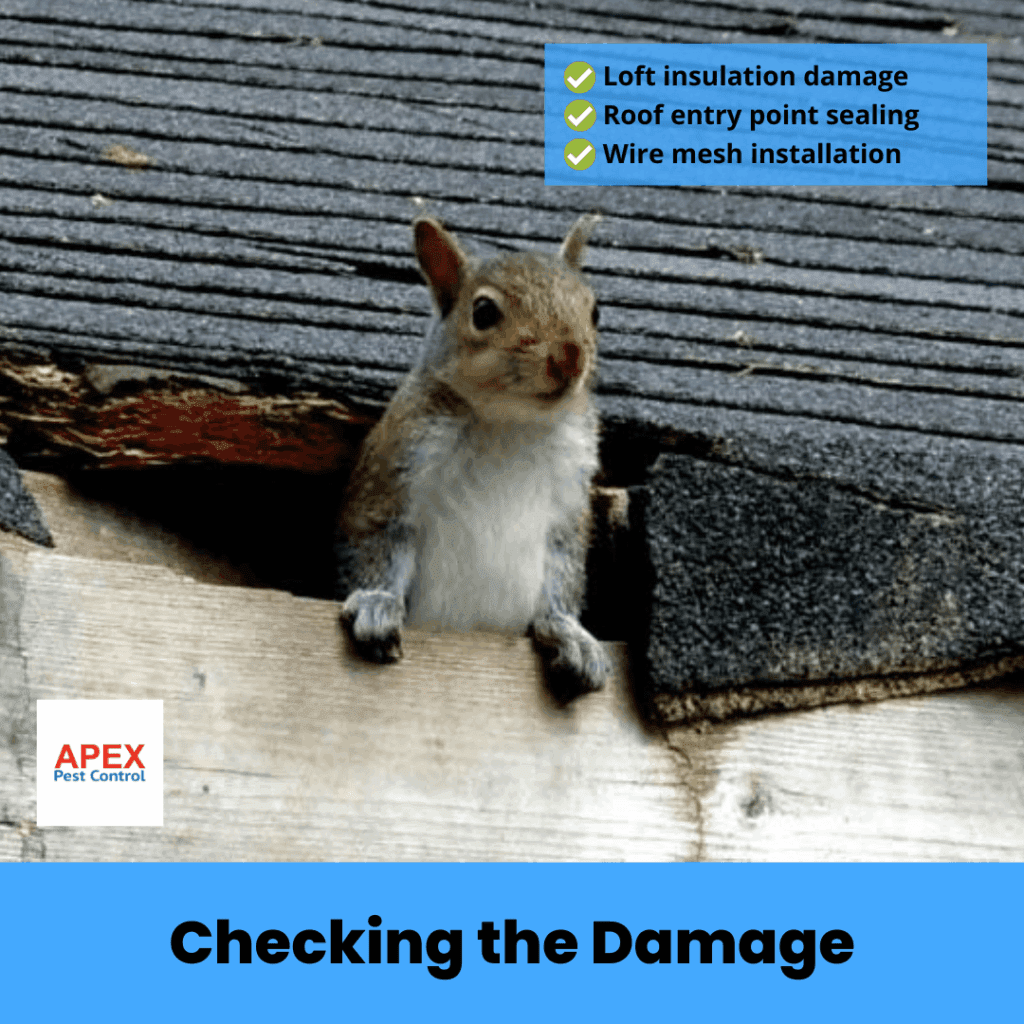
- Squirrels entering through roof gaps or climbing walls
Rodent-induced electrical damage is known to pose a fire hazard. The London Fire Brigade and insurers agree that a large percentage of home fires originate from wiring issues, which are frequently connected to animal activity.
The Impact of Grey Squirrels on Your Home

Squirrels continually grind their teeth to manage the growth of their canines. As a result, they raise the possibility of a fire by removing insulation from live wires. Energy efficiency, structural wood, and stored commodities are all negatively impacted by damaged insulation.
Their pee and poop can contaminate loft spaces and spread germs like Leptospira and Salmonella.
Grey squirrels pose a significant risk to business properties’ food storage, wiring, and HVAC systems, which in turn causes health and safety issues, equipment failures, and downtime.
How Grey Squirrels Endanger Business Warehouses and Other Infrastructure

In warehouses, food outlets, and stockrooms, squirrels can:
- Chew through food packaging
- Contaminate stock and shelving
- Disrupt airflow in HVAC ducts
- Cause foul odours by dying in hidden vents
- Damage to insulation and structural beams
Audit failure, higher operating costs, and even legal noncompliance with food safety laws might result from this. It could be an extensive infestation if you hear noises coming from above or find chewed materials.
Overview of the Grey Squirrel Species
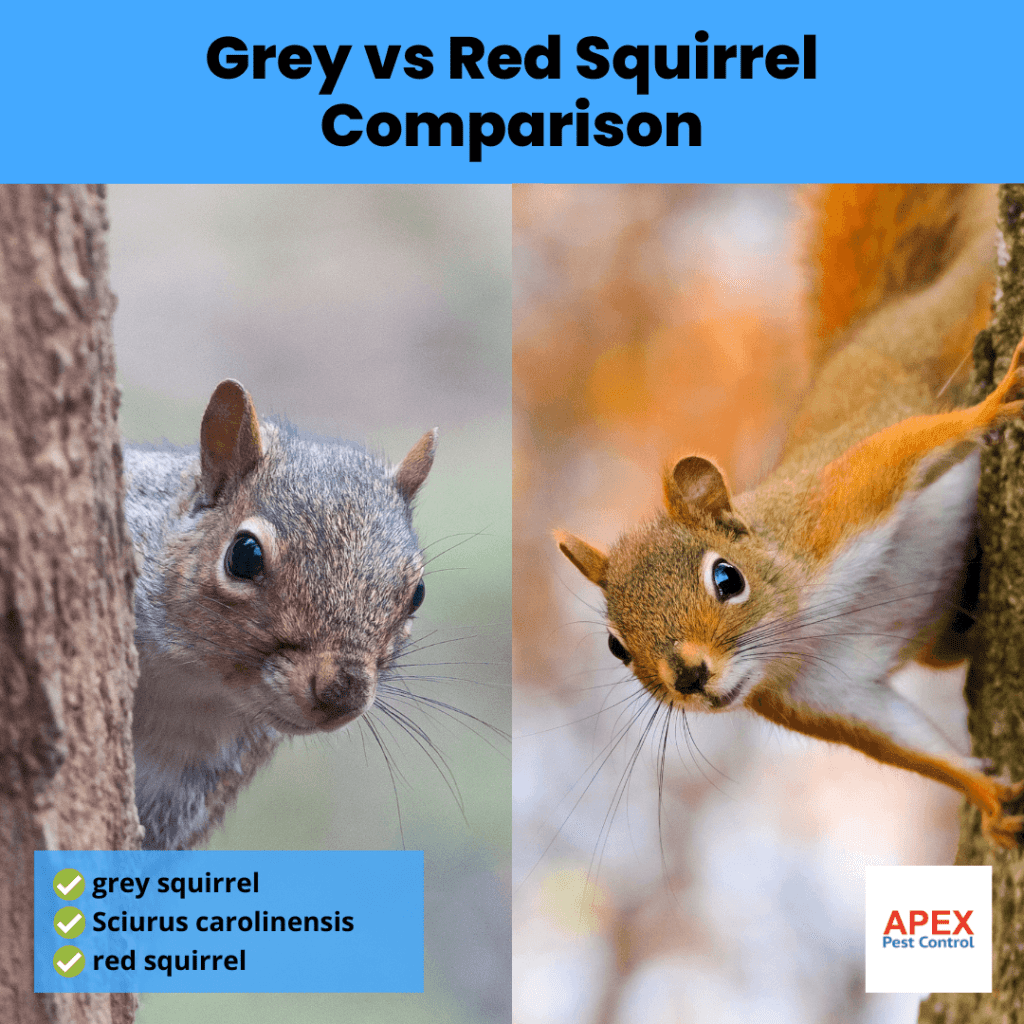
Compared to native red squirrels, grey squirrels are larger and more active throughout the year. They are categorised as an invasive non-native species in the United Kingdom. Native red squirrel populations have declined sharply as a result of their dispersal. Inside buildings, they:
- Use insulation and soft materials to nest
- Gnaw on beams, wiring, and plastic piping
- Enter through roofline gaps, vents, or chimneys
Regulations for Pest Control and Legal Status
Once seized, grey squirrels are prohibited from being released back into the wild by UK legislation. This is explained in:
- Wildlife and Countryside Act 1981 (Schedule 9)
- Invasive Alien Species (Enforcement and Permitting) Order 2019)
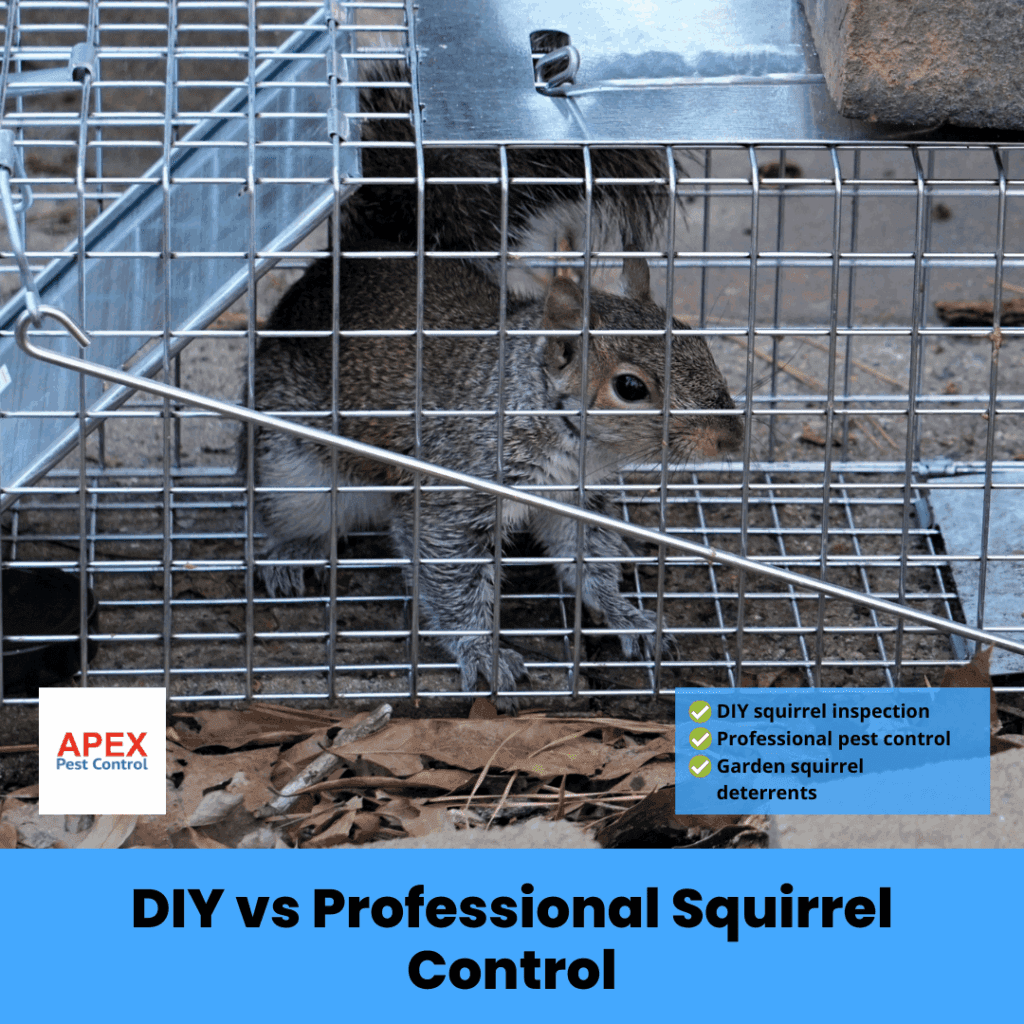
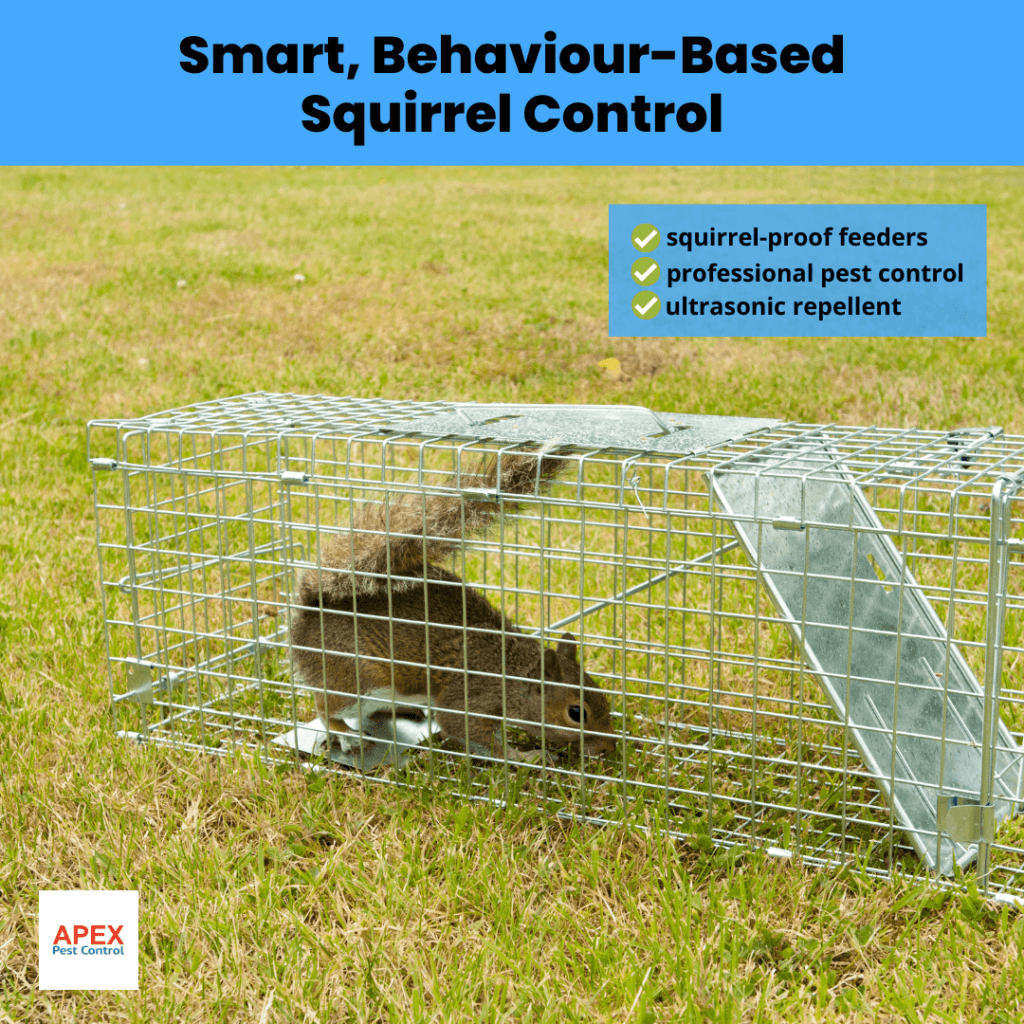
Squirrels that are captured must be handled humanely. Relocating or releasing them without a licence is against the law. For homeowners who use do-it-yourself traps, legal dispatch is also necessary to prevent legal action. In accordance with the Animal Welfare Act of 2006, live-capture traps must be inspected at least once every 24 hours. According to UK wildlife law, prohibited control techniques—like glue traps or unapproved poisons—are unlawful. Keeping a grey squirrel, even temporarily, requires permission under the Imported Animals Order 1932, and licences may also be needed on protected territory (such as SSSIs).
The Seven Most Frequently Asked Questions Regarding Commercial Squirrel Removal

| Question | Answer |
|---|---|
| 1. How fast can squirrels damage a server room? | In just 1–2 days, a squirrel can chew through vital cabling, causing outages or fire hazards. |
| 2. Are squirrel traps legal in the UK? | Yes, Squirrel traps are legal in the UK, including humane live-capture traps and approved spring traps (kill traps), provided they comply with UK wildlife law, such as the Spring Traps Approval (England) Order 2012. |
| 3. What happens after the squirrel is removed? | Technicians assess damage and seal entry points to prevent a return. |
| 4. Can squirrels re-enter after removal? | Not if all access points are properly sealed and preventive measures are maintained. |
| 5. Will insurance cover squirrel damage? | Insurance coverage for squirrel damage depends on the policy terms. Evidence of professional pest prevention efforts may strengthen a claim but is not always required. |
| 6. What’s the legal status of grey squirrels in the UK? | Grey squirrels are classed as invasive non-native species under the Wildlife and Countryside Act 1981. It is illegal to release them once captured, and removal must follow UK wildlife law, including humane dispatch under the Animal Welfare Act 2006. Both licensed professionals and non-professionals can trap and dispatch them humanely, though professionals are recommended for compliance. |
| 7. How do pest controllers find where squirrels are hiding? | They inspect common entry points and nesting areas, using tools like thermal imaging, cameras, and experience to detect signs such as droppings, noise, insulation damage, and gnawed cables. |
Why Do-It-Yourself Techniques Frequently Fail
DIY deterrents and traps could provide temporary respite, but they frequently overlook concealed entry openings. A few indicators of failure are:
- Continued scratching or gnawing sounds
- Fresh droppings or damage after initial treatment
- Squirrels re-entering blocked areas
Professionals use targeted tools and licensed methods to ensure full removal. They understand squirrel behaviour, identify entry points, and seal vulnerabilities to prevent reinfestation. Tools such as endoscope cameras, smoke pencils, and thermal imaging devices are often used.
When to Hire a Qualified Professional to Remove Squirrels
The BPCA, NPTA, and RSPH standards must be adhered to by UK pest control experts. Selecting a certified contractor guarantees:
- Legal compliance
- Safe and humane control
- Use of approved tools and chemicals
- Documentation for insurance purposes
- Qualified staff with RSPH Level 2 in Pest Management or equivalent
Make sure technicians offer post-treatment reports and recommendations and are covered by insurance (e.g., Public Liability Insurance).
Practical Advice for Businesses and Homeowners on Squirrel Prevention

1. Seal Entry Points with Durable Materials
Use durable materials such as:
- Galvanised mesh
- Steel flashing
- Expanding wire wool
Avoid using foam sealants alone-squirrels chew through them easily. Focus on roofline gaps, vents, eaves, fascia boards, weep holes, air bricks, and chimneys.
2. Trim Trees and Remove Climbing Routes
Squirrels can jump up to 2 metres horizontally. Cut back:
- Overhanging branches to maintain a minimum 2-metre gap from roof edges
- Vines or ivy on exterior walls
Maintain a clear perimeter around the roof to reduce access points.
3. Use Physical Deterrents
- Heavy-duty vent covers
- Squirrel-proof mesh over gaps and air bricks
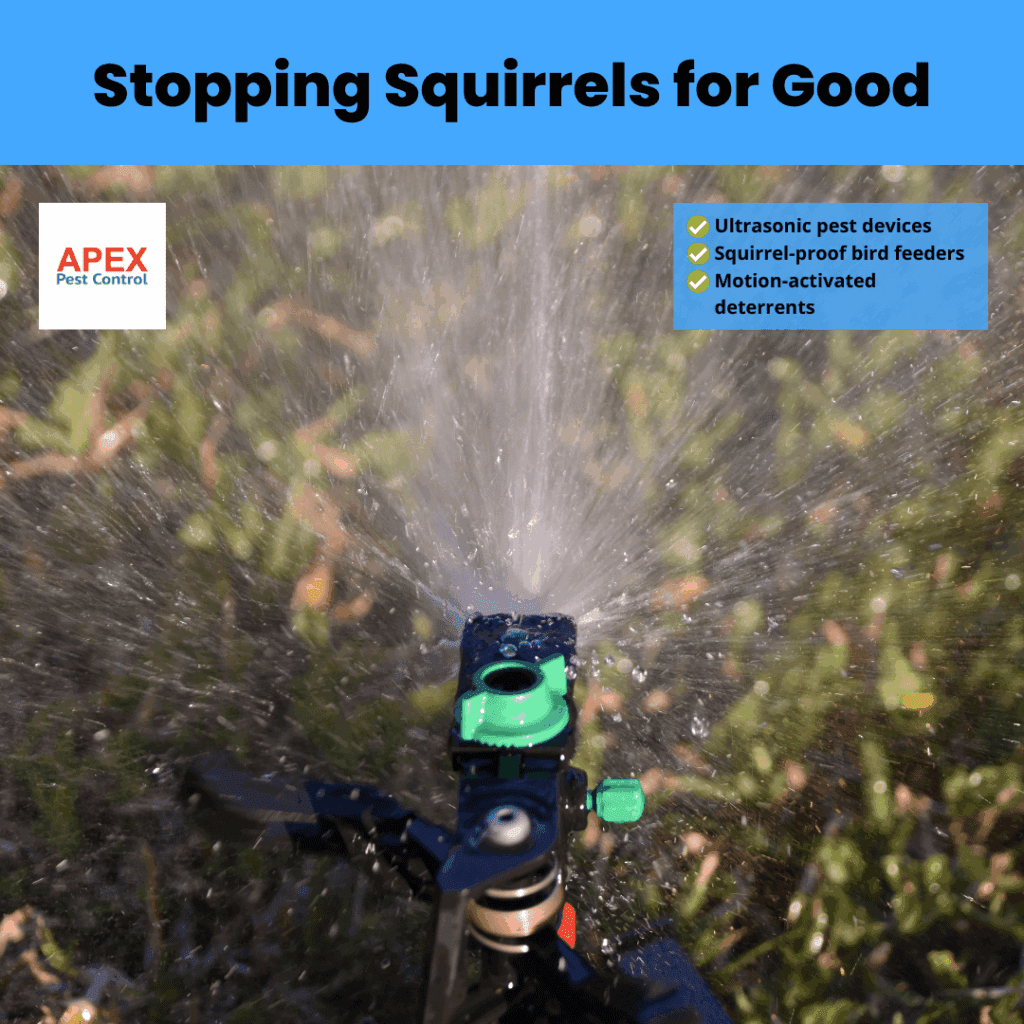
Ultrasonic deterrents are sometimes marketed for squirrel control, but their effectiveness is unproven and not endorsed by UK pest control bodies such as the BPCA. Physical proofing is more reliable.
Use stainless or galvanised steel to prevent rusting and weather damage.
4. Maintain Regular Inspections
Check seasonally, especially:
- After storms or heavy winds
- Around building extensions or modifications
- In garages, sheds, and outbuildings
- Roofline intersections, soffits, loft hatches, and eaves ventilation
Look for signs of re-entry or tampering and act immediately.
Wildlife-Proofing After Removal
After removal:
- Block all former access points
- Fit chimney guards and mesh vent covers
- Use sealants and flashing around weak roofline joints
In commercial sites:
- Secure cable access points
- Reinforce HVAC ducts
- Lock access ladders and plant areas
- Protect IT infrastructure and stockroom entrances
Professionals often offer exclusion guarantees based on the quality of proofing work.
Cleaning and Restoration
Squirrel-infested areas must be cleaned carefully:
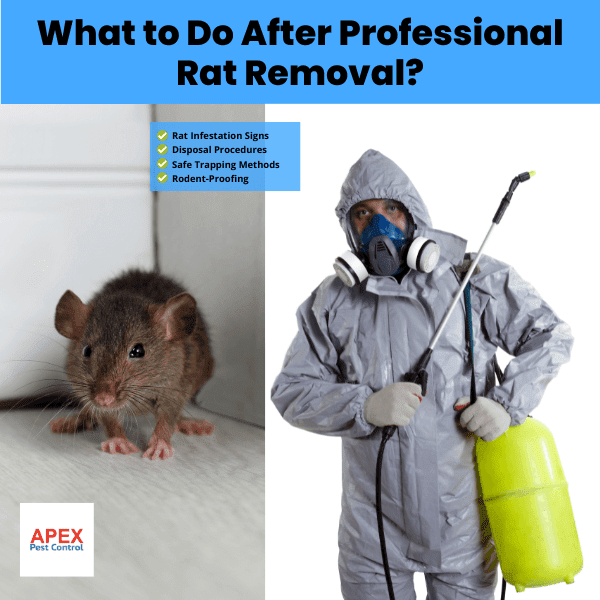
- Wear gloves, mask, and disposable clothing
- Spray droppings with a disinfectant or bleach solution
- Bag and remove waste securely
- Use enzyme-based cleaners on beams and boards
- Ventilate the area
- Replace chewed insulation, damaged timber, and wires
Always use licensed electricians and builders for repair work.
Safe Handling of Droppings and Nesting Material
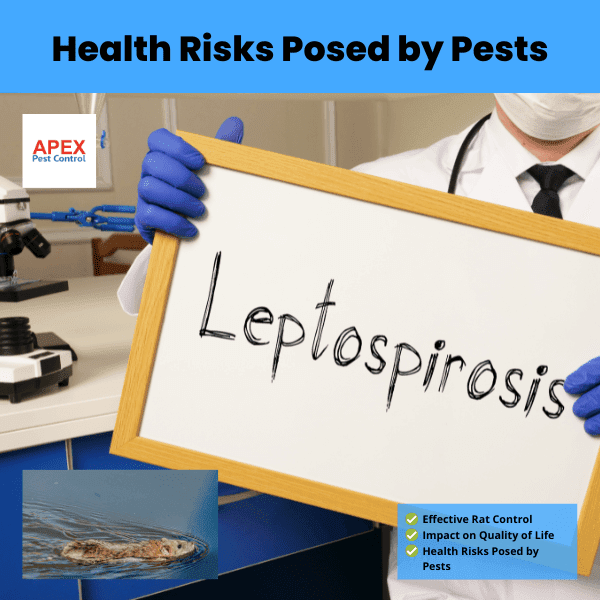
Following the removal of squirrels from a property, the cleanup stage necessitates accuracy and adherence to safety protocols. Leptospira, the bacteria that causes leptospirosis, is one of the dangerous diseases frequently found in squirrel pee and excrement.
The fungus spores that can cause histoplasmosis are among the particles that can be released into the air when dried droppings are disturbed.
Before handling any hazardous material, put on protective clothes, disposable gloves, and a respirator rated for particulate protection (such a N95 mask). Before removing droppings and nesting detritus, soak them in a solution of bleach to water (1:10).
Wetting reduces the chance of inhalation and stops dust from forming. Use paper towels or disposable rags to gather the debris, then double-bag it in heavy-duty bin liners and dispose of it according to local biohazard regulations.
Deodorising and Sanitising Loft or Storage Spaces
Long after the rodents have left, their pheromones can still be detected. If these chemical cues are not successfully neutralised, they may attract fresh infestations. These biodegradable remains cannot be removed by ordinary household cleaners.
Clean any impacted wood and insulation with an enzyme-based cleanser, paying particular attention to nooks, crannies, and concealed crevices.
These chemicals eliminate both odour and attractant proteins by breaking down organic waste at the molecular level. After the area has been sanitised, use industrial fans or natural airflow to completely ventilate it over the course of 24 to 48 hours.
Install ozone generators made for loft areas or activated charcoal filters for lingering odours. These will assist restore indoor air quality by absorbing airborne pollutants.
Cost of Squirrel Removal in the UK
The type of property, the extent of the infestation, and accessibility all affect costs:
- Residential: £120-£300
- Commercial: £300-£1,000+
Request written quotes and ask about post-treatment inspection and proofing guarantees. Reputable companies comply with UK pest control law and offer clear pricing.
Why Delaying Action Is Expensive
Unchecked squirrel infestations can cause:
- Fire hazards due to chewed wires
- Structural damage from gnawed beams
- Insulation contamination
- Failed food safety audits
- Data loss in tech-heavy facilities
Early intervention prevents costly repairs and operational disruptions.
Local Service Areas
Apex Pest Control provides squirrel removal services in:
- Sheffield
- Rotherham
- Barnsley
- Doncaster
- Surrounding areas in South Yorkshire
- Leeds
Stop a Squirrel Emergency Take Action Today
Grey squirrels pose a threat to the safety and integrity of your house or place of business, making them more than just a bother. Legal compliance and long-term protection are guaranteed by skilled personnel providing expert-proofing and humane removal services.
If you reside in South Yorkshire and think your home may have a grey squirrel problem, get in touch with Apex Pest Control right now for a free loft inspection and no-obligation quote.
Popular Squirrel FAQs
What’s the legal status of grey squirrels in the UK?
Grey squirrels (Sciurus carolinensis) are classified as an invasive non-native species in the UK. Under the Invasive Alien Species (Enforcement and Permitting) Order 2019 and Schedule 9 of the Wildlife and Countryside Act 1981, it is illegal to release captured grey squirrels into the wild. Any removal must comply with animal welfare law and must not involve unlicensed transport or relocation. Humane dispatch is required. DIY removal must follow these same rules, and improper handling may result in a prosecution. Red squirrels are a protected species and must not be harmed or disturbed. In commercial or industrial settings, it’s essential to work with a BPCA or NPTA certified pest technician to ensure compliance.
How do pest controllers find where squirrels are hiding?
Professional pest technicians use experience and tools like endoscope cameras, smoke tests, and thermal imaging to locate nests. They inspect roof tiles, soffits, vents, and eaves for gnaw marks, rub stains, or entry points. Inside, they look for shredded nesting material, droppings, or damage to insulation and cables. Identifying all access points is crucial so they can be sealed after removal to prevent re-entry. This methodical approach ensures the infestation is fully cleared and helps prevent recurrence.
Can grey squirrels cause fires or power outages?
Yes. Grey squirrels gnaw through insulation on electrical wiring, exposing live conductors. This can lead to short circuits, power outages, or fires. The risk is especially high in data centres, lofts, and plant rooms housing electrical infrastructure. While exact percentages vary, rodent-related damage is a known and documented cause of electrical faults and insurance claims in the UK. Professional removal and proofing reduces this risk significantly.
What should I do if I hear noises in the ceiling but can’t see any squirrels?
Scratching or scurrying noises at dawn or dusk are often the first signs of a squirrel infestation. Avoid inspecting confined spaces yourself-squirrels may become aggressive if cornered. Instead, document the time and location of the noise, look outside for entry points (e.g., chewed vents or broken tiles), and contact a licensed pest controller. They can use thermal imaging or motion sensors to safely investigate. Early intervention reduces risk and minimises repair costs.
Are squirrel removal costs covered by insurance?
Sometimes-if you’ve taken reasonable preventative steps. Documentation from a licensed pest control firm improves claim approval odds.













 Apex Pest Control Ltd